Home Air Quality Testing: What to Test and What to Skip
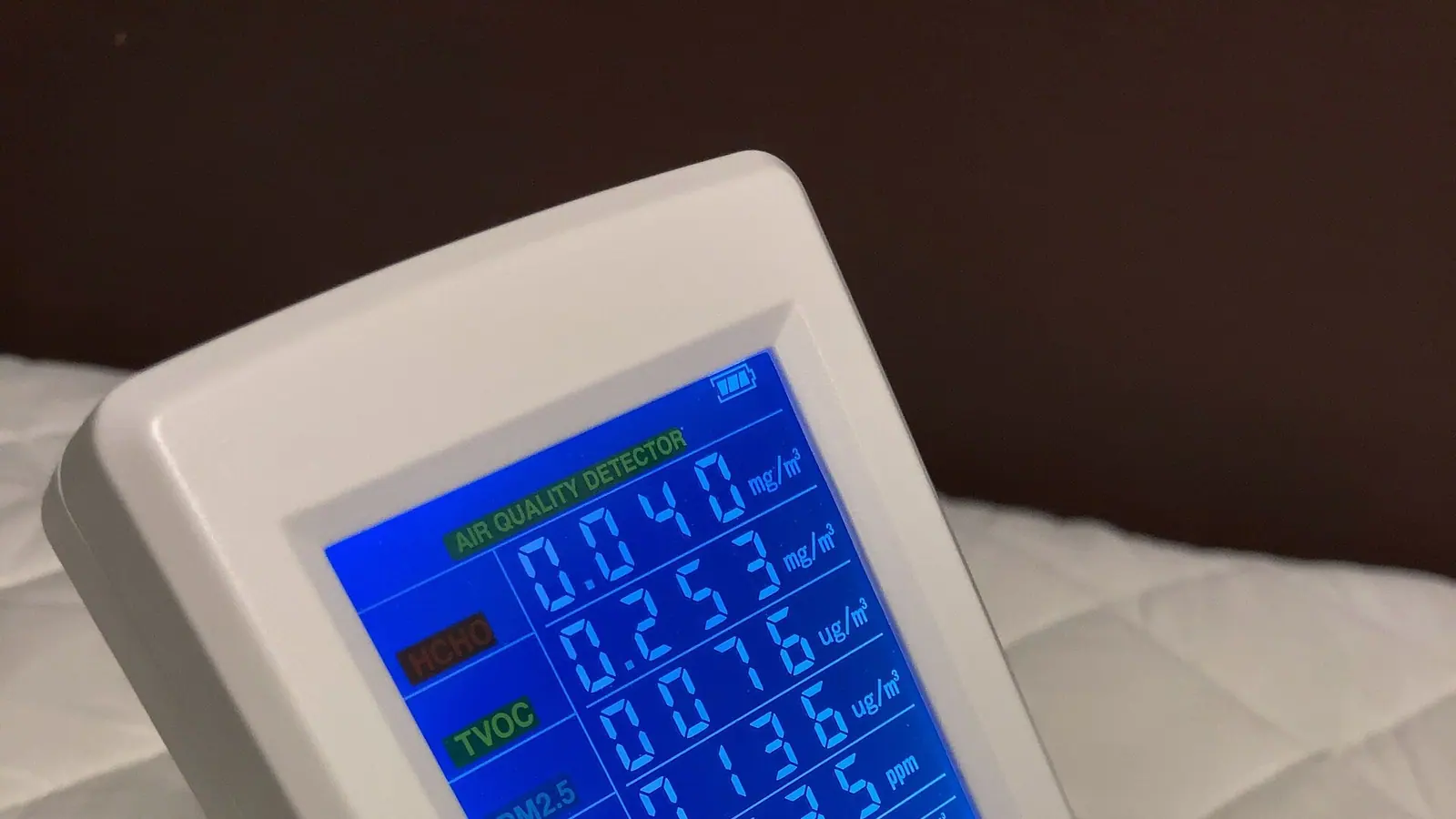

What should home air quality testing include? Start with radon and carbon monoxide, the two invisible gases that can do serious harm and that you can’t detect any other way. After that, a consumer monitor can show trends in particles, VOCs and humidity, but treat its numbers as estimates. Mold usually doesn’t need an air test at all.
How to test air quality in your home
| Test | Why | How |
|---|---|---|
| Radon | Second leading cause of lung cancer | Short- or long-term test kit, or a credentialed professional |
| Carbon monoxide | Odorless, colorless and can kill | CO alarms on every level outside sleeping areas |
| Humidity | Mites and mold need moisture | A basic hygrometer |
| Particles and VOCs | Allergy and airway irritation | Consumer monitor, for trends |
Radon. The EPA says all homes should be tested for radon, and testing is the only way to know your level. It’s the second leading cause of lung cancer, linked to about 21,000 deaths a year, according to the EPA’s risk assessment, which advises fixing a home at 4 pCi/L or more.
Carbon monoxide. CO is odorless and colorless. The EPA lists sources such as unvented heaters, leaking chimneys and furnaces, gas stoves and attached garages, and notes that the Consumer Product Safety Commission recommends CO alarms on each level of the home, outside each sleeping area.
Humidity. For allergies, humidity is the cheapest and most useful number. The EPA advises keeping it below 60%, ideally 30 to 50%. See humidifier vs dehumidifier.
Indoor air quality monitor: what it can tell you
An indoor air quality monitor usually reports fine particles (PM2.5), sometimes coarser particles, total VOCs, carbon dioxide, temperature and humidity. The EPA’s Air Sensor Toolbox notes these lower-cost sensors are widely used and that the agency tests them against reference monitors, because accuracy varies.
Independent testing shows why. Levy Zamora and colleagues evaluated a common low-cost particle sensor. It was precise, but its accuracy ranged from 13% to over 90% depending on the source of the particles. It also measured larger particles poorly and lost accuracy above 50% humidity. A monitor is good for spotting spikes, such as when you cook or light a candle, and for checking whether your air purifier is helping. It isn’t a diagnosis.
Indoor air pollutants and where they come from
The EPA says indoor sources that release gases or particles are the main cause of indoor air problems, made worse by poor ventilation and high humidity.
- Particles: cooking, candles, fireplaces, smoking and outdoor air coming in, the EPA notes.
- VOCs: many are 2 to 5 times higher indoors than outdoors, according to the EPA, from cleaners, air fresheners, paints and other products. Choosing hypoallergenic cleaning products and ventilating while you clean cuts the source.
Mold air testing
The EPA says that if you can see mold, sampling is usually unnecessary, and there are no federal limits to compare a result against. If you suspect hidden mold, for example a musty smell after water damage, sampling should be done by a professional experienced in it. Otherwise, put the money into fixing the moisture; see how to get rid of black mold.
Home air duct cleaning
Duct cleaning is often sold alongside air testing. The EPA says it has never been shown to prevent health problems, and that most dirt in ducts sticks to duct surfaces rather than entering the living space. For particles in the air you breathe, see our guide to the air filter for allergies.
More in Home
Air Purifier for Allergies: HEPA, CADR and What to Avoid
How to choose an air purifier for allergies to dander, pollen and dust: what true HEPA means, sizing with CADR, avoiding ozone and what it can't do.
Best Vacuum for Allergies: Sealed HEPA Systems Explained
What makes the best vacuum for allergies: sealed HEPA systems, bagged vs bagless for dust mite and pet allergies, and how to vacuum without dust.
How to Reduce Allergens in Home: Free Room-by-Room Guide
How to reduce allergens in home, room by room: the bedroom, dust, dust mites, mold, pets and cleaning products, with a free printable checklist PDF.
Hypoallergenic Cleaning Products: What the Labels Mean
How to choose hypoallergenic cleaning products when fragrance or harsh chemicals bother your skin: EPA Safer Choice, gloves and mixes to avoid.
Sources & further reading
- U.S. Environmental Protection Agency — Introduction to Indoor Air Quality: indoor pollution sources that release gases or particles are the primary cause of indoor air problems; inadequate ventilation and high temperature and humidity can raise levels.
- U.S. Environmental Protection Agency — Radon: all homes should be tested for radon; testing is the only way to know your level of exposure.
- U.S. Environmental Protection Agency — Health Risk of Radon: radon is the second leading cause of lung cancer, responsible for about 21,000 lung cancer deaths a year; fix your home at 4 pCi/L or more and consider fixing between 2 and 4 pCi/L.
- U.S. Environmental Protection Agency — Carbon Monoxide's Impact on Indoor Air Quality: CO is odorless and colorless; sources include unvented heaters, leaking chimneys and furnaces, gas stoves and attached garages; CPSC recommends CO alarms on each level outside each sleeping area.
- U.S. Environmental Protection Agency — Volatile Organic Compounds' Impact on Indoor Air Quality: many VOCs are 2 to 5 times higher indoors than outdoors; sources include cleaners, air fresheners and paints; increase ventilation when using them.
- U.S. Environmental Protection Agency — Indoor Particulate Matter: indoor PM comes from outdoor air and indoor sources such as cooking, candles, fireplaces and smoking; small particles can reach deep into the lungs.
- Environmental Science & Technology — Levy Zamora and colleagues, 2019: lab and field evaluation of a low-cost Plantower PM sensor: high precision, but accuracy ranged from 13% to over 90% depending on the particle source, poor for 2.5 to 5 micrometer particles and lower above 50% relative humidity. DOI: 10.1021/acs.est.8b05174.
- U.S. Environmental Protection Agency — Air Sensor Toolbox: lower-cost air sensors are widely used; EPA evaluates their performance and compares them with reference monitors.
- U.S. Environmental Protection Agency — A Brief Guide to Mold, Moisture and Your Home: in most cases, if visible mold is present, sampling is unnecessary; there are no federal limits for mold.
- U.S. Environmental Protection Agency — Should You Have the Air Ducts in Your Home Cleaned?: duct cleaning has never been shown to prevent health problems; most duct dirt sticks to duct surfaces.