White Vinegar for Cleaning: What It Does and Doesn't Do
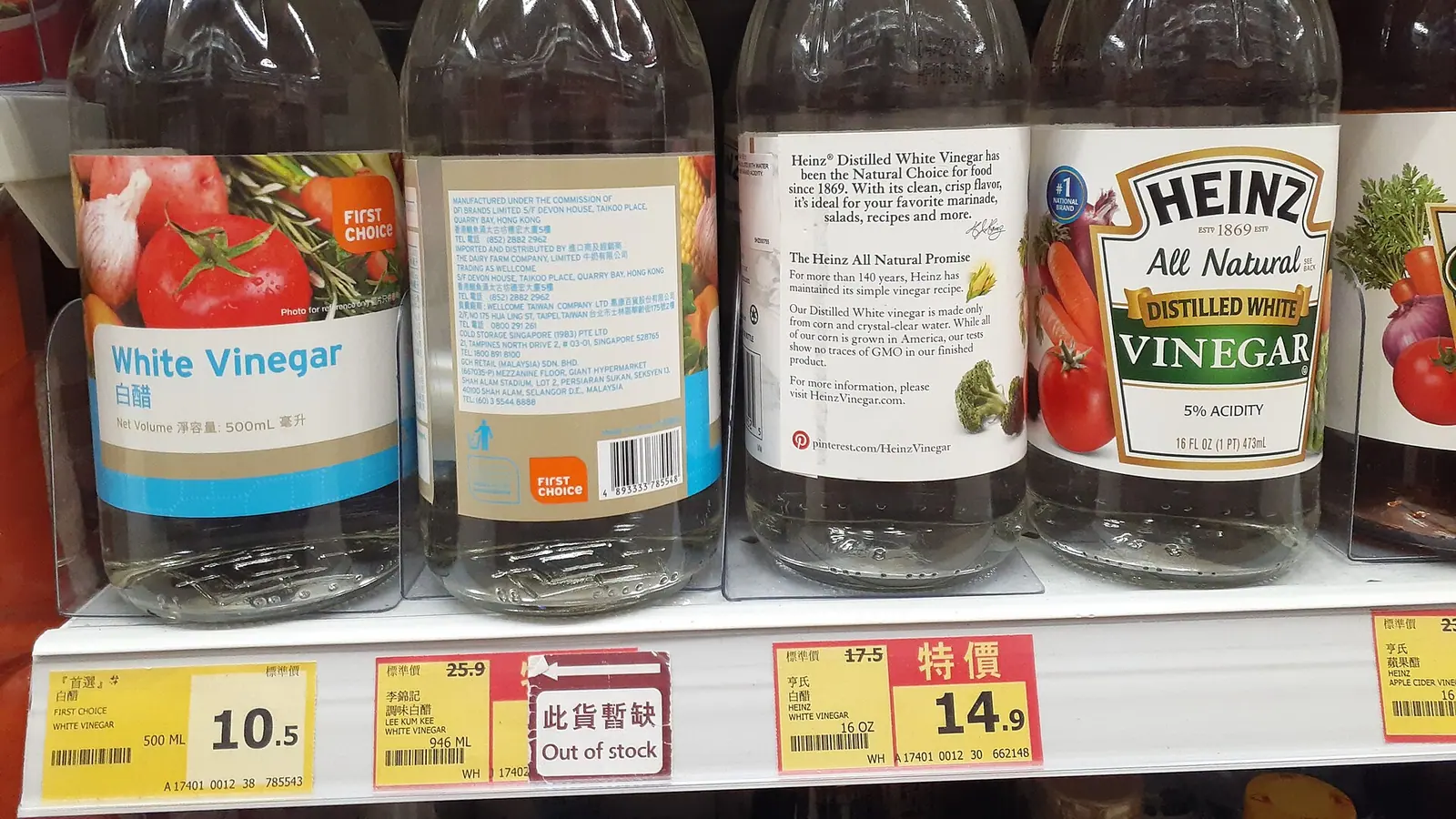

Is white vinegar good for cleaning? For everyday grime, yes: it’s cheap, fragrance-free and doesn’t leave perfume behind, which matters if you react to scented cleaners. But white vinegar for cleaning is a mild acid, not a disinfectant. When germs, mold or a sick household are the concern, use the right product for the job and follow its label.
Does vinegar kill germs?
Some, slowly. In a lab comparison by Rutala and colleagues, vinegar and baking soda were less effective against common bacteria than commercial household disinfectants. Against poliovirus, only two commercial products, Clorox and Lysol Disinfectant, worked. Acetic acid can do more given time: Cortesia and colleagues found a 6% solution killed tuberculosis bacteria after 30 minutes of contact. That’s a long soak, not a quick wipe of the counter.
The EPA registers sanitizers and disinfectants as antimicrobial pesticides, each with tested claims and a stated contact time. Vinegar from the grocery aisle doesn’t come with either, so treat it as a cleaner.
Vinegar cleaning solution: where it fits
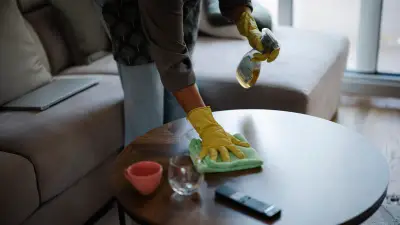
Vinegar is a reasonable choice for wiping glass, counters and fixtures day to day, especially if you’re avoiding fragrance. Pour or wipe it on rather than misting it into the air if you have asthma: in a study of 3,503 adults by Zock and colleagues, using household cleaning sprays at least weekly was linked to new asthma symptoms. That study looked at commercial sprays, not vinegar, but the advice to limit spraying is easy to follow either way.
Distilled white vinegar for cleaning
Distilled white vinegar is the clear vinegar sold for cooking. Vinegar is water with acetic acid, usually about 4 to 12% (PubChem, NIH), so check the acetic acid percentage on the label, because products vary. Wear gloves if your hands are sensitive, and never mix vinegar with bleach (see what not to mix with bleach).
Cleaning mold with vinegar
You’ll see vinegar recommended for mold everywhere, but we found no published study of how well it removes mold from household surfaces. The EPA’s mold guide is clear on what matters: scrub mold off hard surfaces with detergent and water, dry them completely and fix the moisture. Dead mold can still cause allergic reactions, so removing it matters more than which liquid kills it. See how to get rid of black mold for the full steps.
Baking soda and vinegar drain cleaning
Baking soda is broken down by weak acids, PubChem notes, releasing carbon dioxide: that’s the fizz. We found no study showing that cleaning drains with baking soda and vinegar clears clogs. The fizz looks busy, but it isn’t evidence that the clog is gone.
What not to clean with vinegar
Check your manufacturer’s instructions before using vinegar on stone, appliances or anything with rubber parts. For the washing machine, we found no study showing vinegar cleans it well, so follow your manual’s cleaning cycle.
Never mix vinegar with bleach. In a 2020 CDC survey, Gharpure and colleagues found only 35% of adults knew bleach and vinegar shouldn’t be mixed, and about a quarter reported nose, skin or eye irritation they blamed on cleaning products. Use one product at a time and rinse between them. Our bleach allergy guide explains what chlorine exposure does.
For other low-fragrance options, see hypoallergenic cleaning products.
More in Home
Air Purifier for Allergies: HEPA, CADR and What to Avoid
How to choose an air purifier for allergies to dander, pollen and dust: what true HEPA means, sizing with CADR, avoiding ozone and what it can't do.
Best Vacuum for Allergies: Sealed HEPA Systems Explained
What makes the best vacuum for allergies: sealed HEPA systems, bagged vs bagless for dust mite and pet allergies, and how to vacuum without dust.
How to Reduce Allergens in Home: Free Room-by-Room Guide
How to reduce allergens in home, room by room: the bedroom, dust, dust mites, mold, pets and cleaning products, with a free printable checklist PDF.
Hypoallergenic Cleaning Products: What the Labels Mean
How to choose hypoallergenic cleaning products when fragrance or harsh chemicals bother your skin: EPA Safer Choice, gloves and mixes to avoid.
Sources & further reading
- Infection Control & Hospital Epidemiology — Rutala and colleagues, 2000: suspension tests of natural products (vinegar, baking soda) and commercial disinfectants: the natural products were less effective than commercial household disinfectants, and only two commercial products were effective against poliovirus. DOI: 10.1086/501694.
- mBio — Cortesia and colleagues, 2014: A 6% acetic acid solution killed Mycobacterium tuberculosis after 30 minutes; some other mycobacteria needed 10% acetic acid for 30 minutes. DOI: 10.1128/mbio.00013-14.
- MMWR Morbidity and Mortality Weekly Report — Gharpure and colleagues, 2020: among 502 US adults, only 35% knew bleach shouldn't be mixed with vinegar and 58% with ammonia; a quarter reported irritation they blamed on cleaners. DOI: 10.15585/mmwr.mm6923e2.
- U.S. Environmental Protection Agency — What's the difference between products that disinfect, sanitize and clean surfaces: cleaning removes dirt; sanitizing and disinfecting products are registered as antimicrobial pesticides with label claims and contact times.
- U.S. Environmental Protection Agency — A Brief Guide to Mold, Moisture and Your Home: scrub mold off hard surfaces with detergent and water and dry completely; dead mold can still cause allergic reactions.
- PubChem (U.S. National Library of Medicine) — Sodium bicarbonate (baking soda): readily decomposed by weak acids, breaking up into carbon dioxide.
- American Journal of Respiratory and Critical Care Medicine — Zock and colleagues, 2007: in 3,503 adults followed in 10 countries, using household cleaning sprays at least weekly was linked to new asthma symptoms or medication use (relative risk 1.49). DOI: 10.1164/rccm.200612-1793OC.
- PubChem (National Library of Medicine, NIH) — Acetic acid: gives vinegar its sour taste and smell; vinegar is an aqueous solution containing about 4 to 12% acetic acid.