Hypoallergenic Cartilage Earrings: Metal and Infection Risks
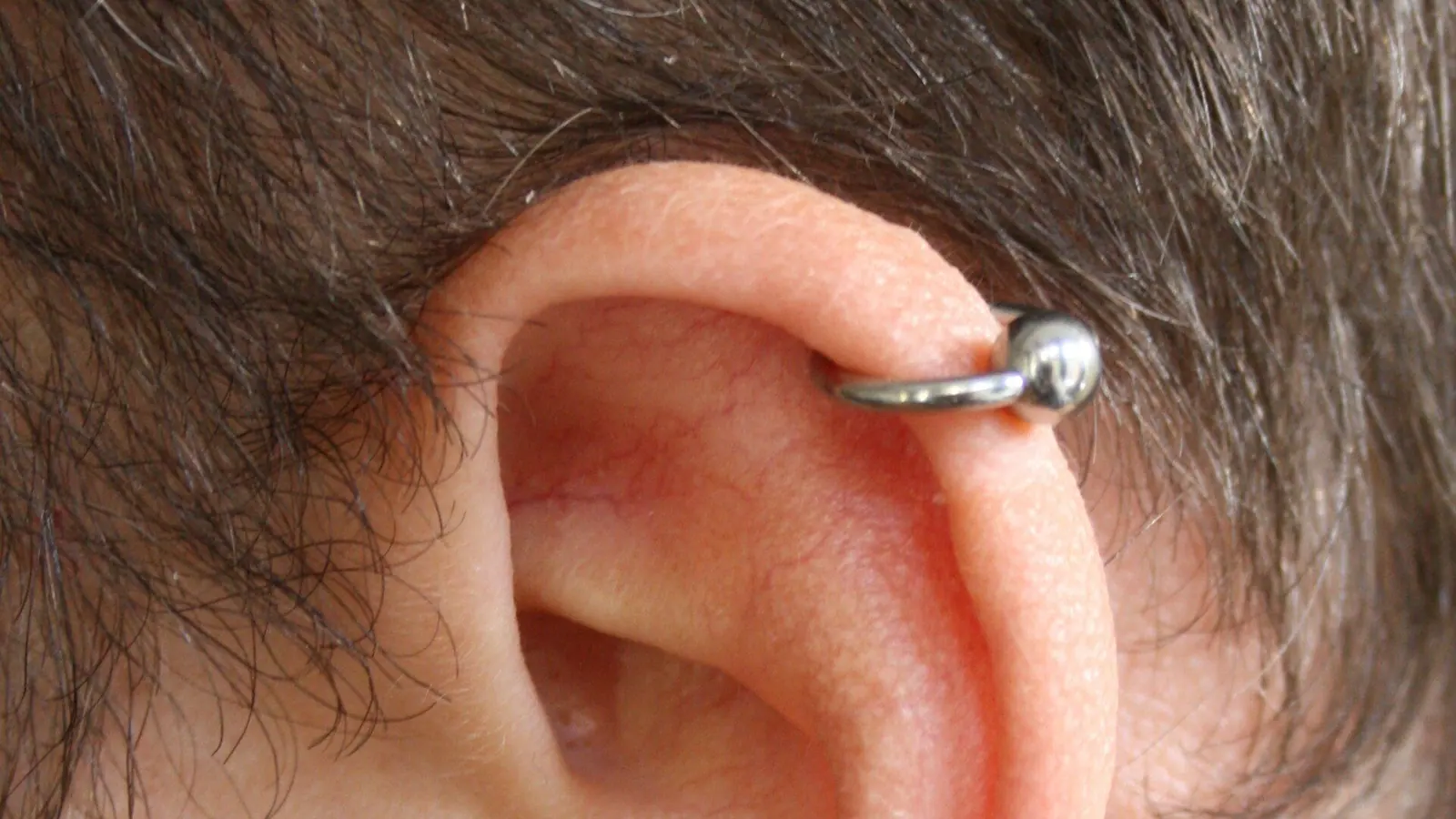

What are the best hypoallergenic cartilage earrings? Hypoallergenic cartilage earrings use a nickel-free post, such as solid titanium, whose allergy rate is low, because a new helix, conch or tragus piercing is an open wound. The metal matters, but with cartilage the bigger danger is infection, so who pierces you and how you care for it count as much as what goes in.
Titanium cartilage earrings: why the metal matters
Titanium cartilage earrings make sense because a fresh piercing is exactly where nickel allergy starts. The 2025 meta-analysis by von Spreckelsen and colleagues found piercing raised the odds of nickel allergy about 3.6- to 5.9-fold, and that 24.7% of European earrings meant for fresh piercings still broke the EU nickel release limit. That limit, 0.2 µg/cm²/week for posts in pierced skin, was written for jewelry sitting in a healing wound, which is what a new cartilage piercing is. Choose the same metals you’d choose for any new piercing; our hypoallergenic piercing jewelry guide compares them.
Cartilage piercing infection
Infections of the upper ear can be serious. In Oregon, Keene and colleagues traced an outbreak at a single mall kiosk: 7 confirmed and 18 suspected Pseudomonas aeruginosa ear infections, all confirmed cases in people aged 10 to 19. Four were hospitalized, four needed drainage, and upper cartilage piercing was riskier than lobe piercing.
The pattern holds in larger series:
- Sosin and colleagues reviewed 66 infected cartilage piercings. Pseudomonas caused 87.2%, 92.3% of patients were hospitalized, and the first oral antibiotic missed the bacterium in 53.3% of cases. Ear deformity followed every infection of the scapha (the groove inside the rim) and 43% of helix infections.
- Of 217 patients treated for perichondritis, Ungar and colleagues found 55.3% were caused by piercing. Those cases appeared about 19 days after piercing on average and more often formed abscesses, which strongly predicted complications.
- In the UK, Brown and colleagues linked 10 cases to one studio. The bacteria matched those in its handwash sink, tap water and water heater, and cases stopped once those were replaced.
So a hypoallergenic metal alone doesn’t make a cartilage piercing safe. A studio’s hygiene matters at least as much.
Pressure and fit. Tight backs can cause their own damage. Fijałkowska and colleagues describe a 7-year-old pierced at a beauty parlor whose earring backs embedded in both earlobes, starting five weeks after piercing, because constant clasp pressure cut off blood flow; they had to be removed in an operating room. That case involved earlobes, not cartilage, but it shows why a back shouldn’t press into swollen skin. Flat backs also avoid pressure points when you sleep; see hypoallergenic flat back earrings.
Warning signs that need a doctor. See a doctor promptly if the upper ear becomes red, hot, swollen or painful after a piercing. Mention the piercing, because cartilage infections often need a specific antibiotic.
Cartilage piercing bump: when it is an allergy
Occasionally a cartilage piercing bump is a firm, persistent lump called a granuloma, an allergic reaction to the metal:
- Goossens and colleagues report two patients with helix papules that became granulomas within 3 to 4 weeks and resisted repeated steroid injections; both reacted strongly to palladium.
- Thijs and colleagues describe a similar palladium reaction at an earlobe piercing.
- High and colleagues describe nodules at upper-ear and lobe piercings about 10 years after piercing, with titanium, aluminum and vanadium particles in the tissue, a rare reaction to titanium alloy.
These are case reports, not common events, but they show that a lump that won’t settle needs a dermatologist, not repeated jewelry changes.
Helix piercing jewelry: how to choose hypoallergenic cartilage earrings
Helix piercing jewelry, like any cartilage jewelry, should meet four checks:
- A metal that isn’t a nickel alloy, such as solid titanium (titanium allergy was found in 0.6% of 1,500 implant patients by Sicilia and colleagues); see titanium earrings and niobium earrings.
- A studio with good hygiene; ask how they clean their equipment and hands.
- A back that doesn’t press into the skin, such as a flat back.
- No plated or palladium-containing pieces until it’s fully healed.
Related guides
For every earring style, see hypoallergenic earrings. If your lobes react too, read earrings for sensitive ears.
More in Jewelry
Hypoallergenic Earrings: Metals That Avoid Nickel
Hypoallergenic earrings explained: which metals avoid nickel, how to read the label, and what to ask a seller before you buy a pair for sensitive ears.
Titanium vs Surgical Steel: Which Suits Sensitive Skin?
Titanium vs surgical steel for nickel allergy: grades, nickel content, ASTM implant specifications, cost, and when each metal makes sense for your skin.
Is Sterling Silver Hypoallergenic? What Nickel Allergy Means
Is sterling silver hypoallergenic? Usually low in nickel, but plating, cheap alloys and tarnish complicate it. When silver suits sensitive skin.
Is 14k Gold Hypoallergenic? Karats, Alloys and Nickel
Is 14k gold hypoallergenic? Pure gold rarely causes reactions, but its alloy metals can. How karat, white or rose color and plating change nickel risk.
Sources & further reading
- Contact Dermatitis — von Spreckelsen and colleagues, 2025: 24.7% of European earrings intended for fresh piercings exceeded the EU nickel release limit, and piercing raised the odds of nickel allergy 3.6- to 5.9-fold. DOI: 10.1111/cod.14837.
- JAMA — Keene and colleagues, 2004: an Oregon kiosk outbreak caused 7 confirmed and 18 suspected Pseudomonas ear infections; upper cartilage piercing was riskier than lobe piercing. DOI: 10.1001/jama.291.8.981.
- The Laryngoscope — Sosin and colleagues, 2015: in 66 cartilage-piercing infections, Pseudomonas caused 87.2%, 92.3% of patients were hospitalized, and the first oral antibiotic missed the bacterium in 53.3%. DOI: 10.1002/lary.25238.
- The Laryngoscope — Ungar and colleagues, 2025: 55.3% of 217 auricular perichondritis cases were piercing-induced; these cases appeared about 19 days after piercing and more often formed abscesses. DOI: 10.1002/lary.32409.
- Epidemiology and Infection — Brown and colleagues, 2025: 10 Pseudomonas perichondritis cases were traced to one UK piercing studio's handwash sink, tap water and water heater. DOI: 10.1017/s0950268824001572.
- International Journal of Dermatology — Fijałkowska and colleagues, 2011: a child's earring backs embedded in both earlobes after clasp pressure caused ischemia and ulceration, and needed surgical removal. DOI: 10.1111/j.1365-4632.2010.04778.x.
- Contact Dermatitis — Goossens and colleagues, 2006: two patients developed steroid-resistant allergic granulomas on the ear helix after piercing, with strong patch test reactions to palladium. DOI: 10.1111/j.1600-0536.2006.00952.x.
- Journal of the American Academy of Dermatology — High and colleagues, 2006: a man developed granulomatous nodules at upper-ear and lobe piercings, with titanium, aluminum and vanadium particles in the tissue. DOI: 10.1016/j.jaad.2006.02.028.
- Dermatitis — Thijs and colleagues, 2008: a granulomatous reaction at an earlobe piercing resisted steroid injections; patch testing showed strong reactions to palladium and nickel. DOI: 10.2310/6620.2008.07045.
- Clinical Oral Implants Research — Sicilia and colleagues, 2008: only 9 of 1,500 dental implant patients (0.6%) tested positive for titanium allergy. DOI: 10.1111/j.1600-0501.2008.01544.x.