Hypoallergenic Piercing Jewelry for a New Piercing
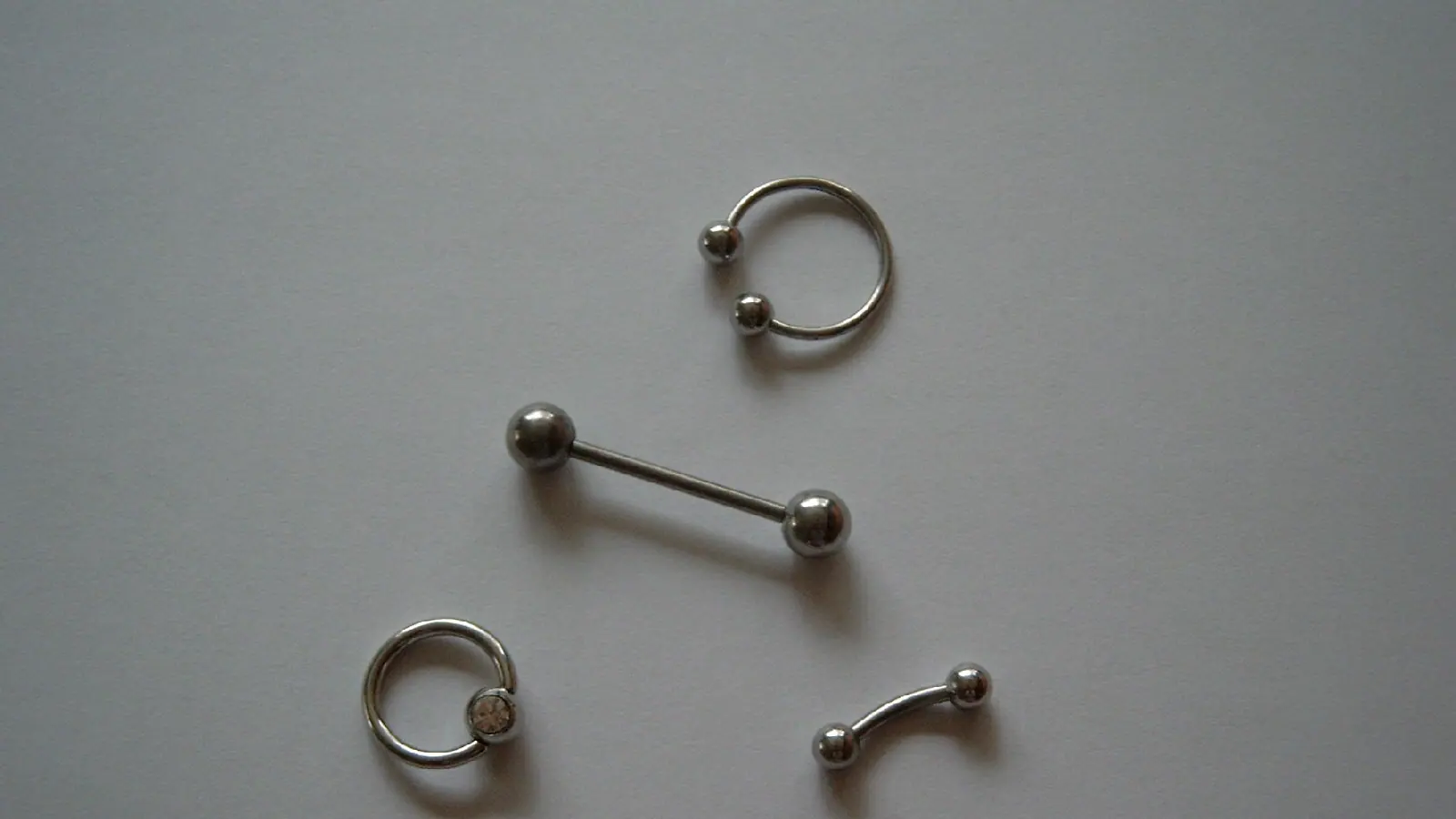

What is the best hypoallergenic piercing jewelry? Hypoallergenic piercing jewelry is made of a metal that releases little or no nickel, such as solid titanium, whose allergy rate is low. It matters most at the very first piercing, because a fresh wound is where nickel allergy usually begins, and MedlinePlus explains that once a contact allergy develops, it is lifelong.
Piercing jewelry for sensitive skin: why the first piercing matters most
A new piercing puts metal directly into broken skin for weeks or months. That’s why piercing and nickel allergy are so closely tied. A 2025 meta-analysis by von Spreckelsen and colleagues found piercing raised the odds of nickel allergy 5.9-fold in the general population. In a European sample of 3,119 adults, Schuttelaar and colleagues found 14.5% were nickel-allergic, with past piercing (odds ratio 3.86) and having three or more piercings (5.58) strongly linked to it.
The good news is that the metal used really changes the outcome. After Denmark limited nickel in 1992, Jensen and colleagues found 17.1% of older schoolgirls, mostly pierced before the rule, were nickel-allergic, compared with 3.9% of younger girls pierced mainly after it.
The EU limit for anything in a piercing. The EU’s strictest nickel rule is written for piercings. Under REACH Annex XVII entry 27, any post assembly inserted into pierced ears or other pierced body parts must release less than 0.2 µg of nickel per cm² per week, compared with 0.5 for jewelry that only touches the skin. Ask what the metal is.
The metal is only half of it. Even with good jewelry, piercings go wrong fairly often. In a survey of 552 nurses, Simplot and Hoffman found 30% of 1,200 pierced ear sites had a complication, most often a minor infection or an allergic reaction, while major complications were under 1%. MedlinePlus lists allergic reactions, keloid scars and infections such as hepatitis as piercing risks and advises a clean, reputable facility with properly sterilized equipment, plus careful aftercare.
Best metal for new piercing jewelry
| Metal | Notes |
|---|---|
| Solid titanium | Allergy is rare (below); see is titanium hypoallergenic |
| Niobium | Little direct allergy research; see niobium earrings |
| Low-sulfur 316L stainless steel | Releases very little nickel but isn’t nickel-free; see surgical steel earrings |
| Solid gold or platinum of a stated purity | Ask what the rest of the alloy is |
| Plated or unknown “fashion” metal | Avoid until fully healed |
Titanium piercing jewelry: can you react to titanium?
Rarely. Among 1,500 dental implant patients, Sicilia and colleagues found titanium allergy in 9 people (0.6%). In patients referred for metal patch testing, Daniely and colleagues found a relevant titanium reaction in 5%, and 38% of those cases were linked to jewelry; they expect this to rise as “nickel-free” jewelry spreads. High and colleagues describe a rare case of firm nodules at ear piercings about 10 years after piercing, with titanium alloy particles in the tissue. Titanium is still the safest bet for most people, but a piercing that keeps reacting deserves a dermatologist.
How to choose hypoallergenic piercing jewelry
- Name the metal: solid titanium is the best-studied option for a new piercing.
- No plating in a healing piercing.
- Pick the right style for the spot: see hypoallergenic nose ring, hypoallergenic septum ring, hypoallergenic cartilage earrings and hypoallergenic belly button rings.
- Choose the studio carefully and follow its aftercare.
Planning a child’s first piercing. Age and order seem to matter. In 4,376 adolescents, Fors and colleagues found that having orthodontic braces before getting pierced roughly halved the risk of nickel allergy, and age at piercing and the number of piercings were also risk indicators. Whatever the age, start with a nickel-free metal.
Related guides
For everyday earrings once you’ve healed, see earrings for sensitive ears and hypoallergenic earrings. For the allergy itself, read nickel allergy symptoms.
More in Jewelry
Hypoallergenic Earrings: Metals That Avoid Nickel
Hypoallergenic earrings explained: which metals avoid nickel, how to read the label, and what to ask a seller before you buy a pair for sensitive ears.
Titanium vs Surgical Steel: Which Suits Sensitive Skin?
Titanium vs surgical steel for nickel allergy: grades, nickel content, ASTM implant specifications, cost, and when each metal makes sense for your skin.
Is Sterling Silver Hypoallergenic? What Nickel Allergy Means
Is sterling silver hypoallergenic? Usually low in nickel, but plating, cheap alloys and tarnish complicate it. When silver suits sensitive skin.
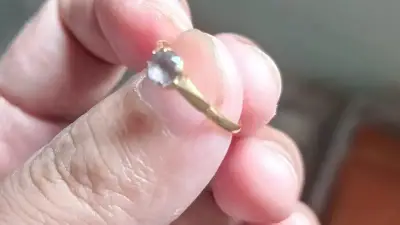
Is 14k Gold Hypoallergenic? Karats, Alloys and Nickel
Is 14k gold hypoallergenic? Pure gold rarely causes reactions, but its alloy metals can. How karat, white or rose color and plating change nickel risk.
Sources & further reading
- Contact Dermatitis — von Spreckelsen and colleagues, 2025: piercing raised the odds of nickel allergy 5.9-fold in the general population and 3.6-fold in dermatitis patients. DOI: 10.1111/cod.14837.
- Contact Dermatitis — Schuttelaar and colleagues, 2018: nickel allergy affected 14.5% of 3,119 European adults; past piercing and three or more current piercings were strongly linked to it. DOI: 10.1111/cod.12983.
- British Journal of Dermatology — Jensen and colleagues, 2002: 17.1% of Danish girls pierced mostly before the 1992 nickel rule were nickel-allergic, versus 3.9% of younger girls pierced mainly after it. DOI: 10.1046/j.1365-2133.2002.04666.x.
- Contact Dermatitis — Fors and colleagues, 2012: braces before piercing roughly halved the risk of nickel allergy in 4,376 adolescents; age at piercing and number of piercings also mattered. DOI: 10.1111/j.1600-0536.2012.02097.x.
- American Journal of Otolaryngology — Simplot and Hoffman, 1998: 30% of 1,200 pierced ear sites had a complication, mostly minor infection or allergic reaction; major complications were under 1%. DOI: 10.1016/s0196-0709(98)90003-5.
- Clinical Oral Implants Research — Sicilia and colleagues, 2008: only 9 of 1,500 dental implant patients (0.6%) tested positive for titanium allergy. DOI: 10.1111/j.1600-0501.2008.01544.x.
- Contact Dermatitis — Daniely and colleagues, 2025: 5% of 255 patients tested with a metal series had a relevant titanium reaction, 38% linked to jewelry. DOI: 10.1111/cod.70021.
- Journal of the American Academy of Dermatology — High and colleagues, 2006: a rare granulomatous reaction at ear piercing sites to titanium alloy jewelry, about 10 years after piercing. DOI: 10.1016/j.jaad.2006.02.028.
- European Union (EUR-Lex) — 2026: REACH Annex XVII entry 27: post assemblies inserted into any pierced body part must release less than 0.2 µg/cm²/week of nickel, stricter than the 0.5 for jewelry that only touches skin.
- MedlinePlus (U.S. National Library of Medicine) — 2026: piercing risks include allergic reactions, keloids and infections such as hepatitis; choose a clean, reputable facility with sterilized equipment and follow aftercare.
- MedlinePlus (U.S. National Library of Medicine) — 2026: nickel in jewelry is a common cause of allergic contact dermatitis, which is lifelong once it develops.