Hypoallergenic Septum Ring: Metals and Risks
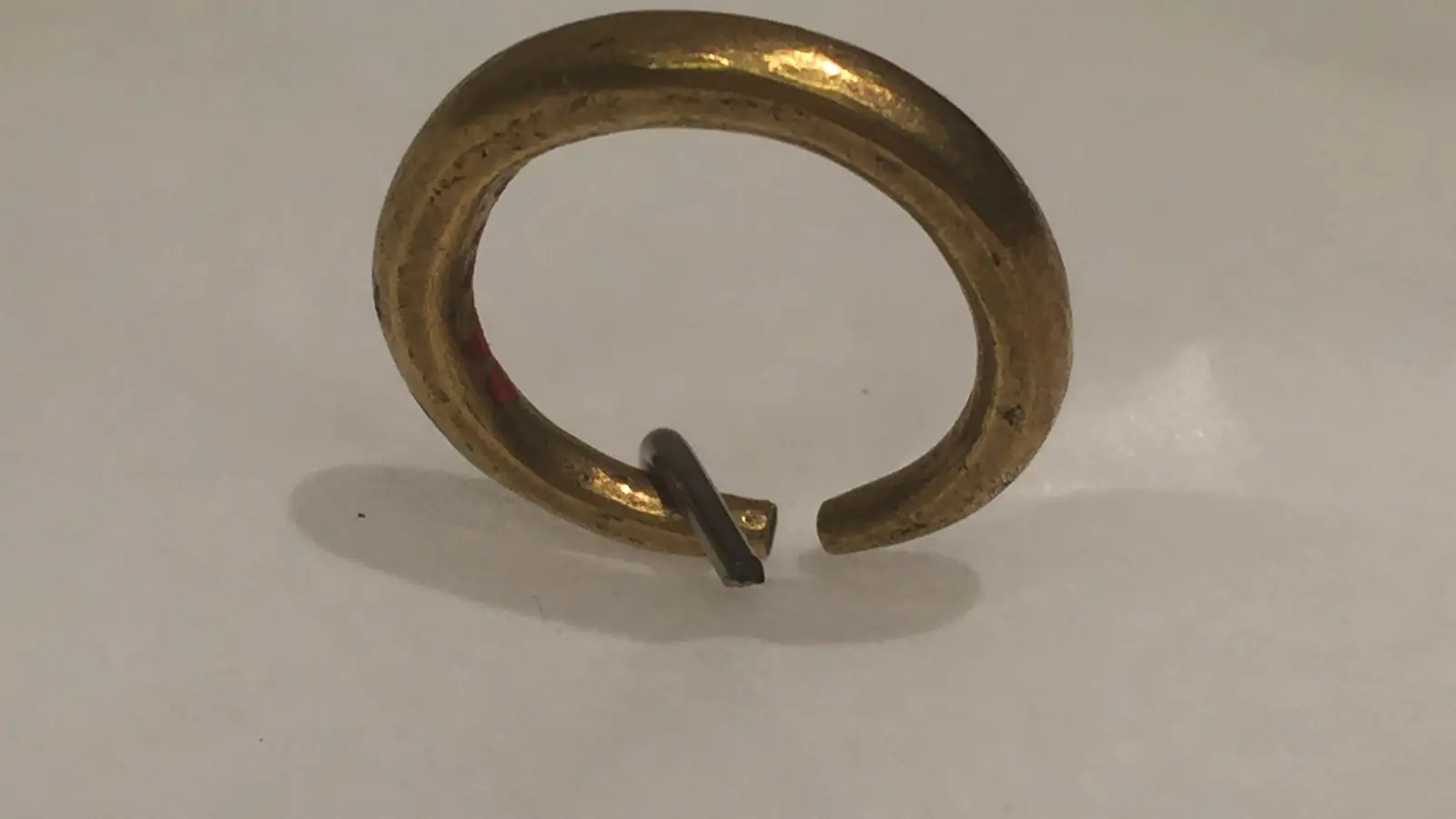
What is the best hypoallergenic septum ring? A hypoallergenic septum ring is made of a metal that releases little or no nickel, such as solid titanium, with no plating. It sits in a piercing through the wall between your nostrils, so the same rules apply as for any new piercing: the metal goes into a wound, and nickel there is how allergies begin. Choosing a careful piercer matters just as much as the ring.
Septum piercing jewelry: the nickel limit
The EU’s strictest nickel limit covers any pierced body part, not just ears. Under REACH Annex XVII entry 27, jewelry inserted into a piercing must release less than 0.2 µg of nickel per cm² per week. Ask what a septum ring is made of before it goes in.
More piercings seem to mean more allergy. In a national U.S. survey of 500 adults, Laumann and Derick found 14% had body piercings, a third of them reported local complications, and self-reported jewelry allergy became more common as the number of piercings increased.
Titanium septum ring and other metals
| Material | Notes |
|---|---|
| Solid titanium | Allergy is rare: 0.6% of 1,500 implant patients (Sicilia and colleagues); see is titanium hypoallergenic |
| Niobium | Little direct allergy research; see niobium earrings |
| Solid gold of a stated karat | Ask what the rest of the alloy is; see is 14k gold hypoallergenic |
| 316L stainless steel | Low nickel release but not nickel-free; see surgical steel earrings |
| Plated or unknown metal | Avoid in a healing piercing |
Septum piercing infection and other complications
Complications are common with body piercings in general. In a survey of 10,503 adults in England, Bone and colleagues found 10% had a piercing somewhere other than the earlobe. Among piercings in 16- to 24-year-olds, 31% led to complications, 15.2% needed professional help and 0.9% led to hospital admission.
For nose piercings specifically, the published evidence is mostly small series and case reports:
- Ghosh and Bandyopadhyay describe 8 patients who developed granuloma pyogenicum, a fast-growing lump that bleeds easily, after nose piercing. They blame non-professional piercers, non-sterile instruments and poor aftercare.
- Among 118 patients hospitalized with an infection just inside the nostril, Lipschitz and colleagues found nose piercing was a risk factor in 5. Staphylococcus aureus caused 81.3% of positive cultures.
- Battagin and colleagues report a single case of a young woman without heart disease who developed a serious heart valve infection (endocarditis) after a septum piercing. It’s rare, but it shows why infection signs deserve attention.
- A review by Holbrook and colleagues warns that nasal jewelry can be inhaled or become embedded and need surgical removal.
No study gives septum-specific rates for problems such as a blood collection in the septum or cartilage infection, so be wary of anyone quoting exact numbers.
Hygiene matters as much as metal. Blood-borne infections are a real piercing risk. Pooling 40 studies, Yang and colleagues found body piercing was associated with 1.80 times the odds of hepatitis B and 1.83 times the odds of hepatitis C. MedlinePlus advises choosing a clean, reputable facility with properly sterilized equipment and following aftercare instructions.
How to choose a hypoallergenic septum ring
- Solid titanium for the initial piercing; no plating.
- A secure closure so the ring can’t come loose and be inhaled.
- A professional studio that sterilizes equipment; ask how.
- See a doctor if your nose becomes red, swollen, very painful or develops a lump that bleeds.
Related guides
For nostril piercings, see hypoallergenic nose ring. For all body piercings, read hypoallergenic piercing jewelry, and for the allergy itself, nickel allergy symptoms.
More in Jewelry
Hypoallergenic Earrings: Metals That Avoid Nickel
Hypoallergenic earrings explained: which metals avoid nickel, how to read the label, and what to ask a seller before you buy a pair for sensitive ears.
Titanium vs Surgical Steel: Which Suits Sensitive Skin?
Titanium vs surgical steel for nickel allergy: grades, nickel content, ASTM implant specifications, cost, and when each metal makes sense for your skin.
Is Sterling Silver Hypoallergenic? What Nickel Allergy Means
Is sterling silver hypoallergenic? Usually low in nickel, but plating, cheap alloys and tarnish complicate it. When silver suits sensitive skin.
Is 14k Gold Hypoallergenic? Karats, Alloys and Nickel
Is 14k gold hypoallergenic? Pure gold rarely causes reactions, but its alloy metals can. How karat, white or rose color and plating change nickel risk.
Sources & further reading
- European Union (EUR-Lex) — 2026: REACH Annex XVII entry 27: jewelry inserted into pierced ears or other pierced body parts must release less than 0.2 µg/cm²/week of nickel.
- Journal of the American Academy of Dermatology — Laumann and Derick, 2006: 14% of 500 U.S. adults had body piercings, a third reported local complications, and self-reported jewelry allergy rose with the number of piercings. DOI: 10.1016/j.jaad.2006.03.026.
- BMJ — Bone and colleagues, 2008: 10% of 10,503 adults in England had a non-earlobe piercing; 31% of piercings in 16- to 24-year-olds led to complications and 0.9% to hospital admission. DOI: 10.1136/bmj.39580.497176.25.
- Journal of Cutaneous Medicine and Surgery — Ghosh and Bandyopadhyay, 2012: 8 patients developed granuloma pyogenicum after nose piercing; non-professional piercers, non-sterile instruments and poor aftercare were the main causes. DOI: 10.1177/120347541201600312.
- Diagnostic Microbiology and Infectious Disease — Lipschitz and colleagues, 2017: nose piercing was a risk factor in 5 of 118 patients hospitalized with infection just inside the nostril; Staphylococcus aureus caused most infections. DOI: 10.1016/j.diagmicrobio.2017.06.007.
- Cases Journal — Battagin and colleagues, 2010: a single case of Staphylococcus aureus endocarditis with emboli after a nasal septum piercing in a young woman without heart disease. DOI: 10.1186/1757-1626-3-37.
- American Journal of Clinical Dermatology — Holbrook and colleagues, 2012: review listing nickel allergy, infection, bleeding and keloids as piercing complications, and warning nasal jewelry can be inhaled or become embedded. DOI: 10.2165/11593220-000000000-00000.
- Medicine — Yang and colleagues, 2015: across 40 studies, body piercing was linked to 1.80 times the odds of hepatitis B and 1.83 times the odds of hepatitis C. DOI: 10.1097/md.0000000000001893.
- MedlinePlus (U.S. National Library of Medicine) — 2026: piercing risks include allergic reactions, keloids and infections such as hepatitis; choose a clean facility with sterilized equipment and follow aftercare.
- Clinical Oral Implants Research — Sicilia and colleagues, 2008: only 9 of 1,500 dental implant patients (0.6%) tested positive for titanium allergy. DOI: 10.1111/j.1600-0501.2008.01544.x.