Hypoallergenic Earring Backs: The Part People Forget
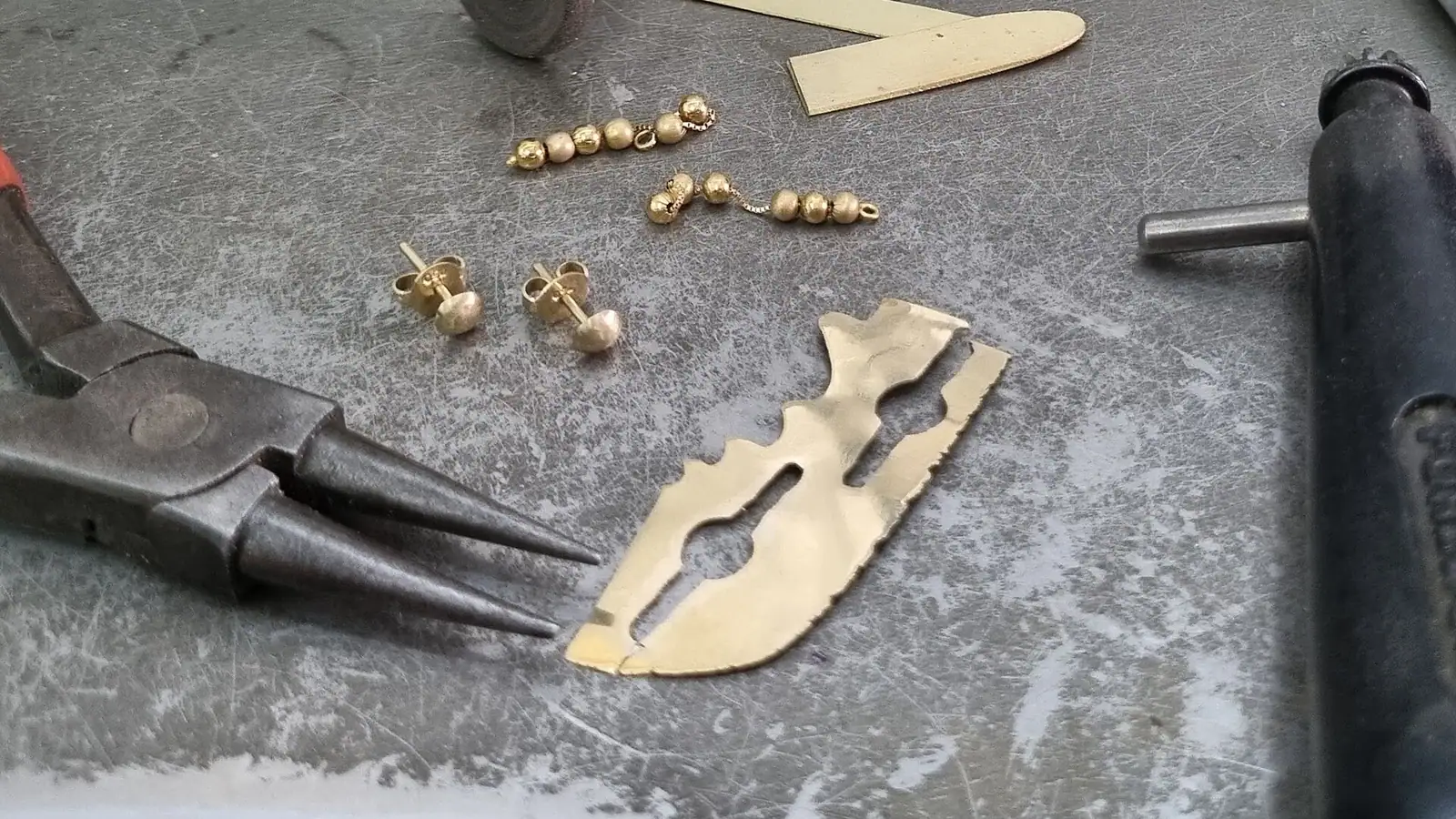

What are hypoallergenic earring backs? Hypoallergenic earring backs are made of the same low-nickel or nickel-free materials you’d want in the post, such as solid titanium, a stated gold karat, low-sulfur 316L steel, or a plastic or silicone back. The back sits against the skin around your piercing all day, so a nickel-releasing back can cause a rash even when the post is fine.
Earring backs for sensitive ears: why the back matters
People shop carefully for the post and forget the little butterfly behind the lobe. But it touches skin for as long as the earring is in, often skin that’s already irritated. EU rules treat it accordingly. Under REACH Annex XVII entry 27, the post inside the piercing must release less than 0.2 µg of nickel per cm² per week, and other earring parts in prolonged skin contact, which includes the back, no more than 0.5. Any coating has to keep release within that limit for at least two years of normal use.
What are hypoallergenic earring backs made of?
Backs are often sold separately or bundled with earrings and rarely labeled in detail. When Hamann and colleagues analyzed 956 metal jewelry parts, copper, iron, zinc and nickel were the most common elements, and 79 of 96 U.S.-bought items released nickel in artificial sweat. In German state surveillance, Uter and Wolter found the post was the worst offender, with 16.2% failing, but 2.0% to 5.9% of other earring parts failed too.
Plated backs are a particular risk. Patch testing 100 nickel-allergic people, Lidén and colleagues found that nickel underlayers beneath gold, silver or chromium plating still caused reactions, while unplated stainless steels caused none. A gold-colored back over a nickel layer can still expose skin to nickel, as those patch tests showed.
Don’t trust the swab alone. You can’t easily tell what a back is made of by looking. The at-home nickel spot test helps only partly: in Denmark, Wennervaldt and colleagues found it caught just 45.2% of earrings releasing at least 0.2 µg/cm²/week. And price is no guide: Thyssen and Maibach found nickel release in inexpensive San Francisco earrings varied widely by store type and wasn’t predicted by price.
Silicone earring backs, titanium earring backs and other options
| Back type | What to check |
|---|---|
| Titanium or niobium butterfly or screw back | Ask that it’s solid, not coated |
| Solid gold back | Stated karat; ask whether it’s plated |
| 316L stainless steel | Stated grade, unplated |
| Plastic or silicone back | No metal at all against the skin; replace when it loosens |
| Unmarked metal back | Assume it may release nickel |
Swap a questionable back for a matching hypoallergenic one rather than throwing away a good post. Make sure the replacement fits the post thickness snugly enough to hold without being pushed tight against the lobe.
Too tight is its own problem. Backs that are pushed too far onto the post can dig into the lobe, especially in children. At a Cincinnati children’s emergency department, Timm and Iyer saw 100 embedded earrings over six years, with a median patient age of 8. In 68 of them the back was the part that had sunk in, and 35% of the sites were infected. Fijałkowska and colleagues describe a 7-year-old whose tightly fixed backs began sinking into both lobes five weeks after piercing, from constant pressure, and had to be removed in an operating room. Leave a little space between the back and the lobe, and check children’s ears regularly.
Related guides
For the post itself, see titanium earrings, surgical steel earrings and hypoallergenic flat back earrings. If your ears react to most earrings, read earrings for sensitive ears, and to understand label claims, see nickel-free earrings.
More in Jewelry
Hypoallergenic Earrings: Metals That Avoid Nickel
Hypoallergenic earrings explained: which metals avoid nickel, how to read the label, and what to ask a seller before you buy a pair for sensitive ears.
Titanium vs Surgical Steel: Which Suits Sensitive Skin?
Titanium vs surgical steel for nickel allergy: grades, nickel content, ASTM implant specifications, cost, and when each metal makes sense for your skin.
Is Sterling Silver Hypoallergenic? What Nickel Allergy Means
Is sterling silver hypoallergenic? Usually low in nickel, but plating, cheap alloys and tarnish complicate it. When silver suits sensitive skin.
Is 14k Gold Hypoallergenic? Karats, Alloys and Nickel
Is 14k gold hypoallergenic? Pure gold rarely causes reactions, but its alloy metals can. How karat, white or rose color and plating change nickel risk.
Sources & further reading
- European Union (EUR-Lex) — 2026: REACH Annex XVII entry 27: piercing posts must release less than 0.2 µg/cm²/week of nickel, other earring parts in prolonged skin contact no more than 0.5, and coatings must hold that for two years.
- Contact Dermatitis — Uter and Wolter, 2017: 16.2% of 160 piercing posts failed their nickel pass threshold, versus 2.0% to 5.9% of other earring parts. DOI: 10.1111/cod.12941.
- Pediatric Emergency Care — Timm and Iyer, 2008: of 100 embedded earrings seen in a children's emergency department, the back was the embedded part in 68 and 35% of sites were infected. DOI: 10.1097/pec.0b013e31815f6f59.
- International Journal of Dermatology — Fijałkowska and colleagues, 2011: a child's tightly fixed earring backs sank into both lobes from constant pressure and had to be removed in an operating room. DOI: 10.1111/j.1365-4632.2010.04778.x.
- British Journal of Dermatology — Lidén and colleagues, 1996: nickel underlayers beneath gold, silver or chromium plating caused reactions in nickel-allergic people, while non-plated stainless steels caused none. DOI: 10.1111/j.1365-2133.1996.tb07601.x.
- Contact Dermatitis — Hamann and colleagues, 2015: copper, iron, zinc and nickel were the most common elements in 956 jewelry parts, and 79 of 96 U.S. items released nickel. DOI: 10.1111/cod.12434.
- Journal of the American Academy of Dermatology — Thyssen and Maibach, 2008: nickel release in 277 inexpensive San Francisco earrings varied widely by store type and wasn't predicted by price. DOI: 10.1016/j.jaad.2008.03.017.
- Contact Dermatitis — Wennervaldt and colleagues, 2021: 14.8% of 304 Danish earrings broke EU nickel limits, and the spot test caught only 45.2% of those above the piercing limit. DOI: 10.1111/cod.13832.