Benzyl Alcohol: Is It Safe in Skin Care? Allergy Facts
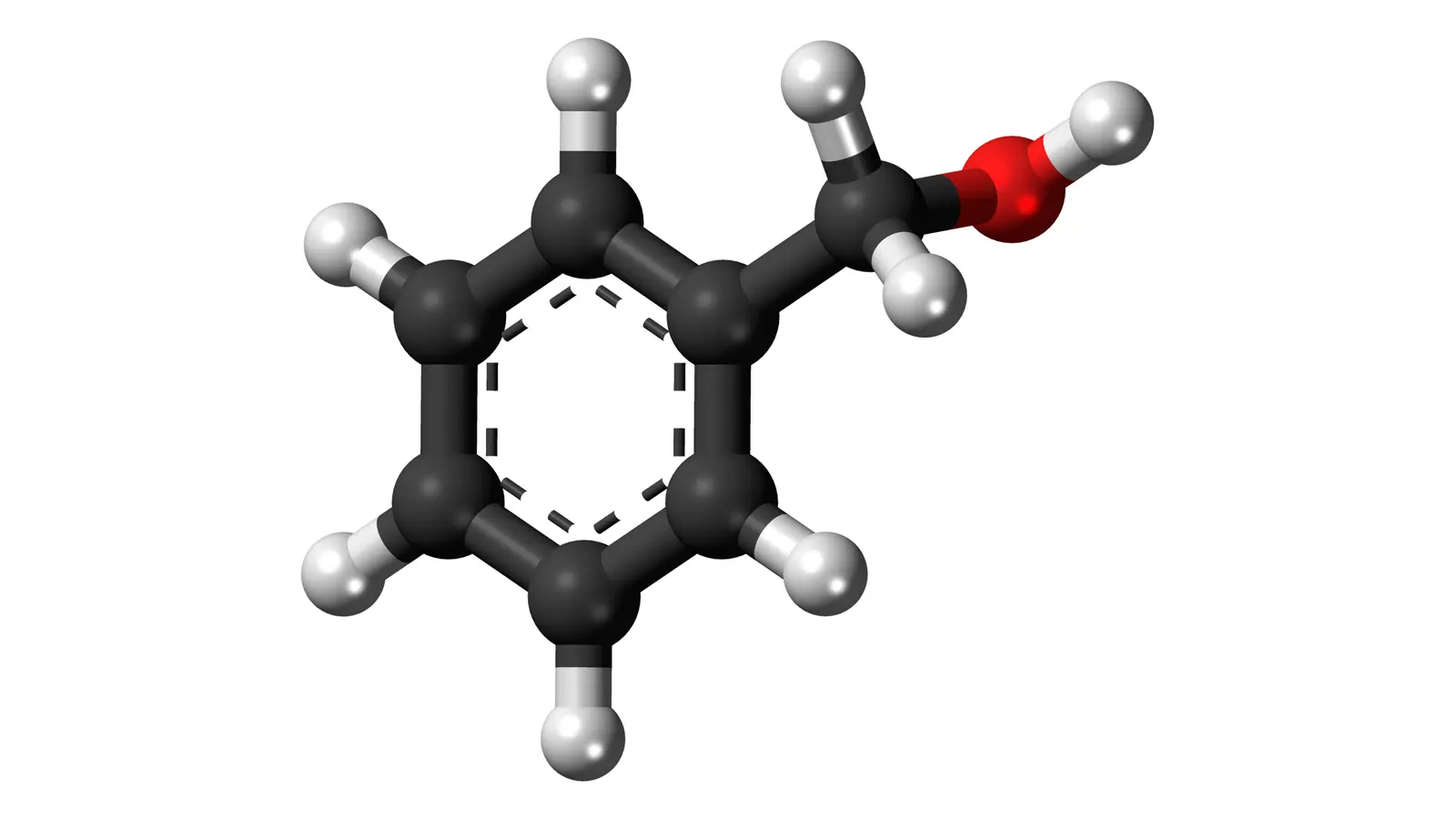

What is benzyl alcohol? Benzyl alcohol is an aromatic alcohol used as a preservative, solvent and fragrance in personal care products, topical medicines and some injectable drugs (Dermatitis 2026). A cosmetic safety panel judged it safe as used (International Journal of Toxicology), and true allergy is rare. Still, the American Contact Dermatitis Society named it Allergen of the Year 2026.
Benzyl alcohol in skin care
In lotions, creams, shampoos and wipes it usually does one of two jobs: keeping the product free of microbes or adding scent. The EU allows it as a preservative at up to 1%, and when it’s used for another purpose, such as fragrance, it must be named on the label above 0.001% in leave-on and 0.01% in rinse-off products (Regulation (EC) No 1223/2009). It’s also in topical medicines, including some corticosteroid creams (Cutis), and the FDA permits it as a synthetic flavoring in food (21 CFR 172.515).
Here’s the catch for label readers: benzyl alcohol can appear in products marketed as “fragrance-free” or “hypoallergenic”, and when it’s part of a fragrance it may be left off the US ingredient list as a trade secret (Cutis). Our fragrance-free vs unscented guide explains why those labels don’t guarantee much.
Is benzyl alcohol safe?
For most people, yes. The Cosmetic Ingredient Review panel concluded that benzyl alcohol, along with benzoic acid, its salts such as sodium benzoate, and benzyl benzoate, is safe in current practices of use and concentration (International Journal of Toxicology). The 2026 Allergen of the Year choice doesn’t mean it suddenly became dangerous. It was meant to raise awareness, because benzyl alcohol isn’t in many standard patch test series and allergy to it may be missed (Dermatitis 2026).
Benzyl alcohol allergy
Allergy is uncommon. In a German dermatology network, 146 of 70,867 patients (0.21%) had a positive patch test to benzyl alcohol between 2010 and 2019, and 89% of those reactions were only weak. The authors concluded it isn’t a significant contact allergen (JEADV). The people who did react were more likely to:
- have dermatitis on the lower legs, often stasis dermatitis linked to poor circulation;
- be 40 or older;
- have been tested because a topical medicine seemed to make their skin worse.
Benzyl alcohol allergic reaction
A reaction is allergic contact dermatitis, usually with prolonged or repeated exposure (Dermatitis 2026): an itchy, red rash where the product was used. Because it’s in some steroid creams, the allergy can look like an allergy to the steroid itself (Contact Dermatitis). If a rash gets worse with a cream that should help, tell your doctor and ask about patch testing that includes benzyl alcohol; our contact dermatitis guide explains the process. People who react to it often react to fragrances and other preservatives too (JEADV), so our fragrance allergy and phenoxyethanol guides are useful next reads.
Benzyl alcohol vs alcohol
On many labels, plain “alcohol”, “alcohol denat.” or “SD alcohol” refers to ethanol, the kind linked to skin irritation and contact dermatitis (Journal of Occupational Medicine and Toxicology). Benzyl alcohol is a different chemical, an aromatic alcohol (Dermatitis 2026) used as a preservative, solvent or scent. So a product can be “alcohol-free” in the ethanol sense and still contain benzyl alcohol. Our witch hazel guide covers alcohol in toners.
More in Ingredients & materials
Nickel Allergy: Causes, Sources, Rules and Testing
Nickel allergy: why nickel causes allergic contact dermatitis, where it's found, how US and EU rules differ, and how spot tests and patch tests work.
Fragrance Allergy: What 'Fragrance' and 'Parfum' Can Hide
Fragrance allergy: why one word on a label can stand for dozens of chemicals, which allergens dermatologists test for, and US vs EU label rules.
Methylisothiazolinone (MI): A Preservative Allergy Explained
Methylisothiazolinone (MI) and MCI/MI: where they're used, why allergy to them surged, how the EU restricted them, and how to spot them on labels.
Formaldehyde Allergy and Formaldehyde Releasers on Labels
Formaldehyde allergy: which preservatives release formaldehyde, the label names to look for, where else it turns up, and what US and EU rules say.
Sources & further reading
- Dermatitis — Le and colleagues, 2026: benzyl alcohol, an aromatic alcohol used as a preservative, solvent and fragrance in personal care products, topical medications and injectables, named 2026 Allergen of the Year by the American Contact Dermatitis Society; generally considered safe but can cause allergic contact dermatitis; missing from many standard patch test series. DOI: 10.1177/17103568251386038.
- Cutis — Zheng and colleagues, 2026: benzyl alcohol is found in personal care products and topical medications, including corticosteroids; it can appear in products marketed as fragrance-free or hypoallergenic, and when used as a fragrance it may be left off the US ingredient list as a trade secret. DOI: 10.12788/cutis.1444.
- Journal of the European Academy of Dermatology and Venereology — Geier and colleagues, 2022: 70,867 patients patch tested in Germany, 2010 to 2019: 0.21% positive to benzyl alcohol, 89% only weakly; more common with leg (stasis) dermatitis and suspected reactions to topical medicines; not regarded as a significant contact allergen. DOI: 10.1111/jdv.17968.
- International Journal of Toxicology — Johnson and colleagues, 2017: cosmetic Ingredient Review safety assessment of benzyl alcohol, benzoic acid and its salts, and benzyl benzoate: mostly fragrance ingredients and preservatives; safe in present practices of use and concentration. DOI: 10.1177/1091581817728996.
- Contact Dermatitis — Kubin and colleagues, 2016: case report: benzyl alcohol allergy mimicking corticosteroid allergy. DOI: 10.1111/cod.12562.
- European Union — Regulation (EC) No 1223/2009 on cosmetic products: Annex V allows benzyl alcohol as a preservative up to 1.0%; Annex III requires it on the label above 0.001% in leave-on and 0.01% in rinse-off products when used for other purposes, such as fragrance.
- U.S. Food and Drug Administration (21 CFR 172.515) — Synthetic flavoring substances permitted for direct addition to food, including benzyl alcohol.
- Journal of Occupational Medicine and Toxicology — Lachenmeier, 2008: safety evaluation of ethanol on the skin: use is associated with skin irritation or contact dermatitis. DOI: 10.1186/1745-6673-3-26.