Hypoallergenic Concealer: What to Check for Sensitive Skin
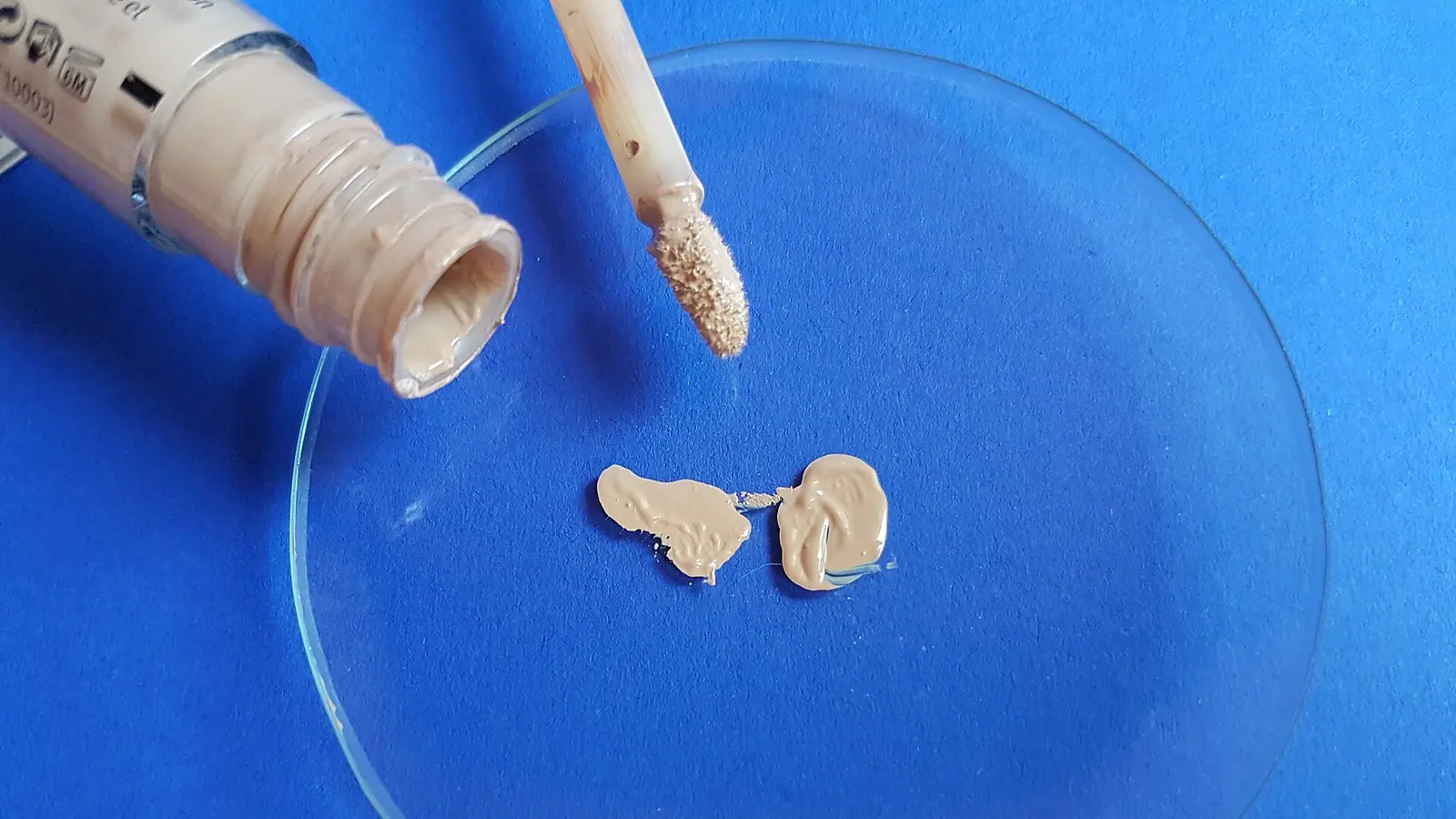

What is the best hypoallergenic concealer? For sensitive skin, the best hypoallergenic concealer is fragrance free, free of any preservative you react to, and, if you’re acne-prone, non comedogenic. Don’t rely on the word “hypoallergenic” alone: the FDA says it has no federal definition and means whatever the company wants it to mean.
Concealer for sensitive skin: the allergens to check
Concealer goes on small areas but stays all day, often on thin skin around the eyes and nose. Reactions to cosmetics are common: in more than 10,000 patch-tested patients, Warshaw and colleagues traced at least one allergy to a cosmetic in 23.8% of women.
Check the ingredient list for:
- Fragrance, parfum and essential oils. Our fragrance allergy guide lists the names.
- Methylisothiazolinone (MI) and related preservatives. In a recent North American study, 11.5% of patients patch tested reacted to MI, second only to nickel (Dermatitis). See our page on preservatives.
- Anything you’ve reacted to before. Even products sold as hypoallergenic can contain allergens: one report describes allergy to pentylene glycol in “hypoallergenic” eye cosmetics.
If a rash appears in the middle of your face, makeup isn’t the only suspect. A review in Clinical Reviews in Allergy and Immunology notes that gold released from rings can contaminate foundation. Our contact dermatitis on the face guide covers the other causes.
Non comedogenic concealer
Concealer is often used on blemishes, so pore-clogging matters. Choose one labeled non comedogenic, but judge it by how your skin responds: when Draelos and DiNardo tested finished products, those made with “comedogenic” ingredients weren’t necessarily comedogenic. Covering spots needn’t set back acne treatment: in a study of 50 women with acne, using makeup with guidance didn’t worsen their treatment, and their quality of life improved. Our guide to non comedogenic makeup explains what the claim means.
Mineral concealer
Mineral concealers are made mainly from mineral pigments. A review in Clinical, Cosmetic and Investigational Dermatology describes mineral makeup for sensitive, rosacea-prone skin as talc free and based on titanium dioxide, zinc oxide, iron oxides, mica, bismuth oxychloride or boron nitride. “Mineral” isn’t a guarantee, so the same label checks apply, and if you want to avoid talc, look for it by name; see talc free makeup. For covering redness, see makeup for rosacea.
Hypoallergenic concealer for sensitive eyes
Under-eye concealer sits close to the eyes, so the FDA’s eye cosmetic advice applies:
- Use products intended for the eye area near your eyes.
- Wash your hands before applying, and don’t share eye-area products.
- Avoid store testers unless they’re applied with a single-use applicator.
Clean tools matter. In a study of used cosmetics in the Journal of Applied Microbiology, 79% to 90% of products were contaminated with bacteria, and beauty sponges carried the most. Try a new concealer on a small patch of skin before using it under your eyes, as our patch test guide explains, and see hypoallergenic makeup for sensitive eyes for the rest of your eye routine.
More in Skincare
What Does Hypoallergenic Mean on a Label? The Legal Answer
What does hypoallergenic mean? In the US it has no legal definition for cosmetics, detergents or jewelry. What the FDA says and which signals count.
Fragrance Free vs Unscented: Why the Difference Matters
Fragrance free vs unscented: unscented products can hide masking fragrance, and fragrance-free ones may still contain scented plant oils. Read the label.
Fragrance Free Moisturizer for Sensitive Skin: How to Choose
How to choose a fragrance free moisturizer for sensitive or eczema-prone skin: ointments vs creams, barrier-repair ingredients and common irritants.
Hypoallergenic Makeup for Sensitive Eyes: What to Look For
Hypoallergenic makeup for sensitive eyes: how to choose mascara, liner and shadow when your eyelids itch or water, and the hygiene habits that matter most.
Sources & further reading
- U.S. Food and Drug Administration — No Federal standards or definitions govern the term "hypoallergenic"; it means whatever a particular company wants it to mean.
- U.S. Food and Drug Administration — Eye cosmetic safety: don't share eye cosmetics; testers carry a greater contamination risk, so use single-use applicators; wash hands; use only products intended for the eye area near the eyes.
- Journal of the American Academy of Dermatology — Warshaw and colleagues, 2009: of 10,061 patch-tested patients, 23.8% of women and 17.8% of men had at least one allergic reaction traced to a cosmetic. DOI: 10.1016/j.jaad.2008.07.056.
- Dermatitis — Houle and colleagues, 2025: in 3,056 patients patch tested at 12 North American centers (2021-2022), 11.5% reacted to methylisothiazolinone, second only to nickel. DOI: 10.1089/derm.2024.0474.
- Contact Dermatitis — Seremet and colleagues, 2023: case report: allergic contact dermatitis from pentylene glycol in 'hypoallergenic' eye cosmetics. DOI: 10.1111/cod.14224.
- Clinical Reviews in Allergy and Immunology — Zirwas, 2019: cosmetic allergy is probably the most common reason for patch testing; central facial dermatitis can come from gold released from rings contaminating makeup foundation or from makeup ingredients. DOI: 10.1007/s12016-018-8717-9.
- Journal of the American Academy of Dermatology — Draelos and DiNardo, 2006: human assay of finished cosmetics: products made with comedogenic ingredients are not necessarily comedogenic. DOI: 10.1016/j.jaad.2005.11.1058.
- Journal of Dermatology — Matsuoka and colleagues, 2006: study of 50 women with acne, 25 instructed in skin care and makeup and 25 not: instruction did not worsen acne treatment, and quality of life improved, especially on psychological measures. DOI: 10.1111/j.1346-8138.2006.00174.x.
- Clinical, Cosmetic and Investigational Dermatology — Sobkowska and colleagues, 2023: mineral makeup should be talc free and based mainly on titanium dioxide, zinc oxide, iron oxides, mica, bismuth oxychloride or boron nitride; high-coverage products are less suitable for rosacea. DOI: 10.2147/CCID.S412800.
- Journal of Applied Microbiology — Bashir and Lambert, 2020: 79% to 90% of used cosmetics were contaminated with bacteria; beauty sponges carried the highest loads. DOI: 10.1111/jam.14479.