Anaphylaxis Kit: What to Pack in an Allergy Emergency Bag
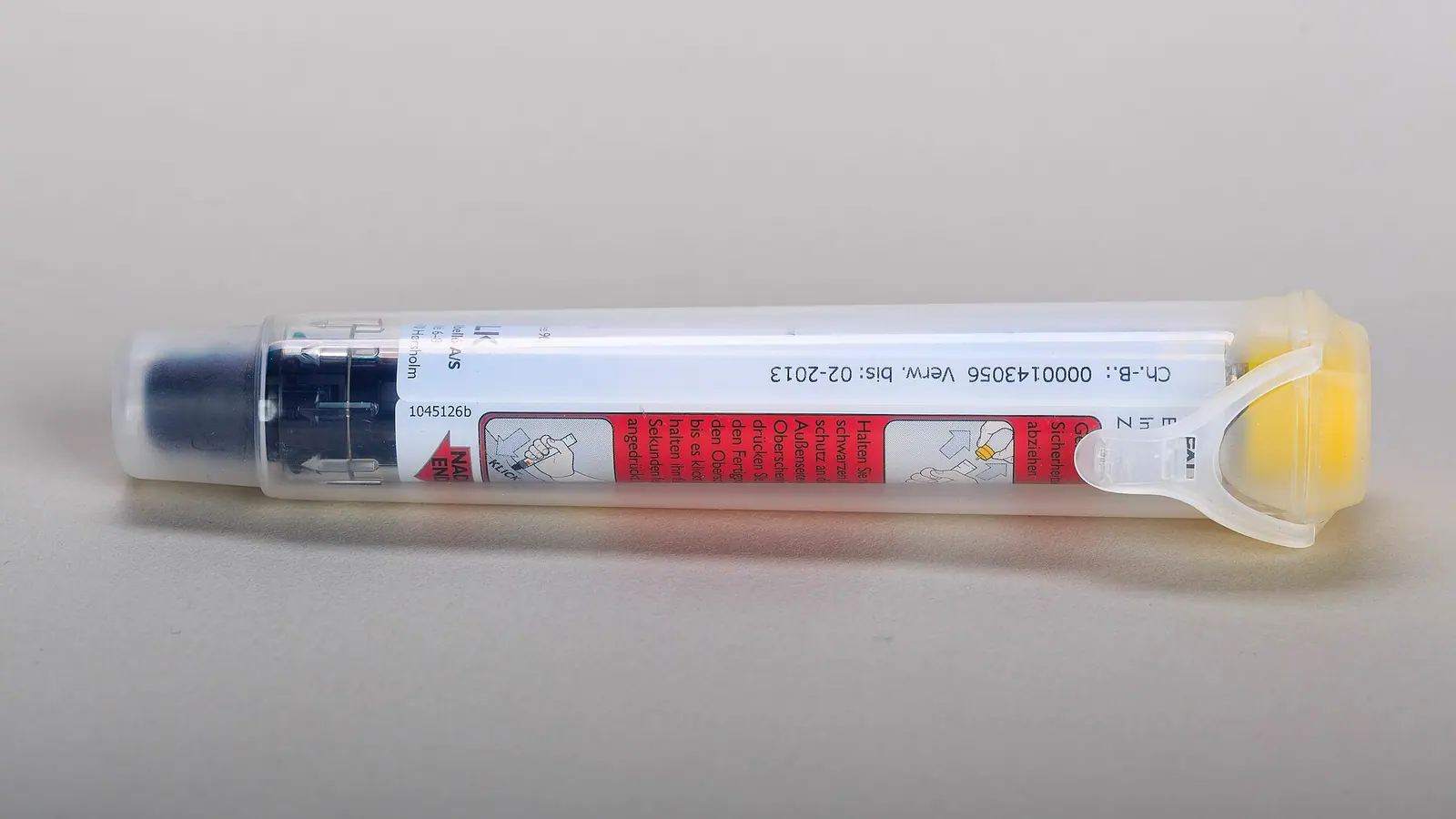

What goes in an anaphylaxis kit? An anaphylaxis kit (or allergy kit) holds two doses of the epinephrine your doctor prescribed, usually two auto-injectors, a signed emergency action plan, any other medicines on that plan, medical ID and a few things that help you avoid exposure, such as wipes and safe snacks. It should be light, easy to spot and always with you.
Emergency: If someone shows signs of anaphylaxis, such as trouble breathing, throat tightness, swelling of the lips or tongue, repeated vomiting or fainting, use their epinephrine (auto-injector or nasal spray) right away and call 911. Don’t wait for an antihistamine or an inhaler to work. Our anaphylaxis symptoms guide lists the warning signs.
What goes in an allergy emergency kit
Start with what saves time in a reaction, then add what helps prevent one. This checklist follows the FDA-approved auto-injector label and the anaphylaxis guidance from the American Academy of Pediatrics (Wang and colleagues) and the World Allergy Organization (Cardona and colleagues).
| Item | What it's for |
|---|---|
| Two epinephrine auto-injectors, or two nasal spray devices (whichever was prescribed) | First treatment for anaphylaxis. The EpiPen label tells you to always carry 2, because one dose may not be enough before help arrives. The epinephrine nasal spray label also uses a new device for a second dose (DailyMed). |
| Signed emergency action plan | Names the allergens, the symptoms to watch for, the medicines and doses, and the steps to follow, so anyone can act. |
| Antihistamine (only if your plan includes it) | Can ease itching and hives. It doesn't treat breathing or circulation problems and never replaces epinephrine. |
| Rescue inhaler (if you have asthma and it's on your plan) | For wheezing, used as your plan says. In anaphylaxis it's a second-line medicine: epinephrine still comes first. |
| Medical ID and emergency contacts | Tells others about the allergy and who to call if you can't speak for yourself. |
| Copies of prescriptions or a doctor's note | Helpful for refills, travel and emergency care. |
The World Allergy Organization guidance gives antihistamines a limited role in anaphylaxis, mainly for skin symptoms, and lists them with beta2-agonist inhalers as second-line medicines (Cardona and colleagues). The U.S. practice parameters agree that epinephrine is the first-line treatment (Shaker and colleagues). The steps for using the pen are in our EpiPen guide, and our anaphylaxis symptoms guide covers the needle-free nasal spray.
Food allergy action plan
A written plan turns a stressful moment into a list of steps. The American Academy of Pediatrics recommends a personalized allergy and anaphylaxis emergency plan for children at risk, given together with the epinephrine prescription, and its clinical report includes a plan your doctor can fill in (Wang and colleagues). Food Allergy Research & Education also offers a free Food Allergy & Anaphylaxis Emergency Care Plan form. Whichever you use, ask your allergist to sign it, and keep the plan in the kit, next to the auto-injectors, not in a folder at home. Our allergy action plan guide explains what goes in it. The World Allergy Organization advises always carrying it (Cardona and colleagues).
Allergy bracelets and medical ID
People at risk of anaphylaxis should have a medical identification method, according to the World Allergy Organization guidance (Cardona and colleagues). That can be an allergy bracelet, a necklace or a wallet card. Write the allergy, “carries epinephrine” and an emergency contact; our medical alert bracelet guide covers the wording and nickel-free metals. A card inside the kit helps too, because a helper will open the bag before they look for a bracelet.
EpiPen case and carrier: keeping two auto-injectors together
Any EpiPen case, holder, pouch or bag works if it does three jobs: it keeps two auto-injectors together, it protects them from light and heat, and it opens fast. EpiPen 2-Paks come with an S-clip that joins the two carrier tubes, and the label says to keep each pen in its carrier tube because epinephrine is light-sensitive (DailyMed). So a separate EpiPen carrier is a holder for the tubes, not a replacement for them. The same goes for an Auvi-Q case or a generic device: check your own device’s instructions.
What to look for in an EpiPen bag or pouch:
- Room for two devices plus the folded plan. A case that fits only one pen invites leaving the second at home.
- A bright color or a clear label such as “EPINEPHRINE INSIDE” with the person’s name, so others can find it.
- A zipper or clip you can open with shaky hands, no knots or tiny buckles.
- Some insulation if you spend time outdoors in heat or cold. It helps, but it doesn’t make a hot car safe.
Keep the kit on you or in the bag you actually carry. Don’t leave it in the car, in a backpack stored somewhere else or in checked luggage: it has to be within reach in minutes, and auto-injectors should stay near room temperature (see the monthly checks below).
Food allergy kit: wipes, safe snacks and cleanup
The second half of the kit helps avoid a reaction in the first place.
Soap or wipes, not hand gel. In a study of peanut allergen, washing with liquid soap, bar soap or commercial wipes removed it from hands, but antibacterial hand sanitizer left it on 6 of 12 hands and plain water on 3 of 12 (Perry and colleagues). Common household cleaners removed it from tables, but dishwashing liquid left it on 4 of 12 tables. Pack:
- Disposable wipes for hands, tables and trays
- A small bar or bottle of soap for when there’s a sink
- Zip-top bags or a container to keep safe food apart
- Your own utensils or cup, if cross-contact is a worry where you’re going
- Non-latex gloves if you have a latex allergy or need to handle food for someone else
Safe snacks. Carry sealed, labeled snacks that don’t need refrigeration, plus water. They cover a delayed flight or a party where you can’t check ingredients. Read the label each time you restock, because recipes change; our guide to food allergies explains how U.S. allergen labels work, and the peanut allergy guide covers the most common trigger in children.
The kit isn’t only for food. People with a bee sting allergy or a drug allergy carry the same core: two auto-injectors, the plan and medical ID.
Food allergy emergency kit for kids
A child’s kit needs the same core plus what helps the adults around them act. The 2023 practice parameter stresses training caregivers on when and how to use the auto-injector and when to call 911, and planning for community settings such as schools (Golden and colleagues).
- Two auto-injectors at the right dose. EpiPen Jr 0.15 mg is labeled for children who weigh 15 to 30 kg (33 to 66 lb), and EpiPen 0.3 mg for 30 kg (66 lb) or more (DailyMed). Ask the doctor at each checkup whether the dose still fits. In 2017 the AAP called dosing for infants and toddlers under 15 kg a dilemma, because the lowest auto-injector dose was then 0.15 mg (Sicherer and colleagues). Today the FDA label of one auto-injector, Auvi-Q, includes a 0.1 mg dose for children who weigh 7.5 to 15 kg (about 17 to 33 lb) (DailyMed), so ask your child’s doctor which device and dose fit.
- A printed copy of the emergency plan with a photo, and copies for school, daycare, sitters and grandparents.
- An emergency card: name, allergy, parents’ phone numbers and the doctor’s name and number.
- Safe snacks and a drink in a container with the child’s name.
- Wipes and a change of clothes if skin contact could set off a reaction.
- Something calming, like a small toy or book, for waiting time.
EpiPen 2-Paks include a trainer device with no needle or medicine (DailyMed). Practice with it together, and with every adult who looks after your child.
Label the outside of the bag so a teacher or coach can’t miss it:
ALLERGY EMERGENCY KIT
Name: ____________________
Allergy: __________________
Emergency medicine: ________
Emergency contact: _________
Inside, use four small pouches or compartments: (1) medicines and the plan, (2) wipes and cleanup, (3) safe food, (4) ID, contacts and prescriptions.
Checking your anaphylaxis kit every month
Pick a date, like the first of the month, and run through this list:
- Expiry dates. Order a refill before the auto-injectors expire. Outdated EpiPens delivered less epinephrine the longer they were past their date (Simons and colleagues). If an expired pen is the only one you have in an emergency, use it as long as the solution isn’t discolored and has no particles, then call 911: the authors concluded the benefit outweighs the risk of a lower dose.
- The viewing window. The solution should be clear and colorless. Replace the device if it’s pinkish, brown, cloudy or has particles (DailyMed).
- Heat and cold. The label says to store EpiPens at 68-77°F, with short excursions to 59-86°F allowed, and not to refrigerate them. In a lab test, auto-injectors kept at 158°F (70 °C) for 10 days delivered only about 78% of the labeled dose (Rachid and colleagues). The EpiPen patient instructions say not to keep it in a glove box or trunk, or in the refrigerator or freezer (DailyMed). Replace any pen left in a hot car or frozen.
- The plan. Is it signed, current and does it match the medicines in the bag?
- Other medicines, wipes and snacks. Check dates, replace dried-out wipes and expired or opened food.
- Fit for what’s ahead. Adjust the kit for a trip, a new school year, sports or a growing child.
After any reaction, replace the used auto-injector right away and see your allergist; the U.S. practice parameters recommend follow-up education on recurrence and trigger avoidance after every episode (Shaker and colleagues).
More in Food allergies
Food Allergies: The 9 Major Allergens, Symptoms and Labels
Food allergies, from the nine major U.S. allergens to symptoms and anaphylaxis, which tests work, how to read labels, and what's new from the FDA.
Tree Nut Allergy: Which Nuts Count, Symptoms and Labels
Tree nut allergy: the 12 nuts the FDA counts, why coconut is now off the list, cross-reactions, symptoms, testing and reading U.S. food labels.
Anaphylaxis Symptoms: Signs, What to Do and Epinephrine
Anaphylaxis symptoms to act on: the warning signs doctors use, why epinephrine comes first, the nasal spray option, and what to do after a reaction.

Shellfish Allergy: Symptoms, Labels and the Iodine Myth
Shellfish allergy: crustaceans vs mollusks, symptoms, why it's so common in adults, what U.S. labels must show, and why iodine isn't the cause.
Sources & further reading
- U.S. National Library of Medicine (DailyMed) — FDA-approved EpiPen and EpiPen Jr label: always carry 2 auto-injectors; keep them in the carrier tube to protect from light; store at 68-77°F, excursions 59-86°F, don't refrigerate; replace if the solution is discolored or cloudy; weight ranges for the 0.3 mg and 0.15 mg doses.
- U.S. National Library of Medicine (DailyMed) — FDA-approved Auvi-Q label: dosing by weight, including 0.1 mg for patients who weigh 7.5 kg to less than 15 kg.
- U.S. National Library of Medicine (DailyMed) — FDA-approved neffy epinephrine nasal spray label: 2 mg for 30 kg or more and 1 mg for 15 to less than 30 kg; a second dose uses a new nasal spray.
- Pediatrics — Wang and colleagues, 2017: american Academy of Pediatrics clinical report on completing a written, personalized allergy and anaphylaxis emergency plan, given together with the epinephrine prescription. DOI: 10.1542/peds.2016-4005.
- Pediatrics — Sicherer and colleagues, 2017: american Academy of Pediatrics clinical report on epinephrine for first-aid management of anaphylaxis: prompt injection in the mid-outer thigh, auto-injector prescribing, the dosing dilemma in infants and young children, and family education. DOI: 10.1542/peds.2016-4006.
- World Allergy Organization Journal — Cardona and colleagues, 2020: world Allergy Organization anaphylaxis guidance: always carry a personalized written emergency action plan, have a medical identification method; antihistamines and beta2-agonists are second-line. DOI: 10.1016/j.waojou.2020.100472.
- Journal of Allergy and Clinical Immunology — Perry and colleagues, 2004: peanut allergen was undetectable after hand washing with liquid soap, bar soap or commercial wipes, but plain water and antibacterial hand sanitizer left it on 3 of 12 and 6 of 12 hands; household cleaners removed it from tables, dish liquid less well. DOI: 10.1016/j.jaci.2004.02.035.
- Drug Development and Industrial Pharmacy — Rachid and colleagues, 2015: in-date epinephrine auto-injectors stored at 70 °C delivered about 78% of the labeled dose after 10 days of constant storage and about 87% after 5 days of cyclic heating. DOI: 10.3109/03639045.2015.1035283.
- Journal of Allergy and Clinical Immunology — Simons and colleagues, 2000: outdated EpiPen and EpiPen Jr auto-injectors delivered less epinephrine the longer they were past the expiration date; the authors conclude an outdated one can still be used if it's the only one available and shows no discoloration or precipitates. DOI: 10.1067/mai.2000.106042.
- Journal of Allergy and Clinical Immunology — Shaker and colleagues, 2020: 2020 anaphylaxis practice parameter: epinephrine is first-line treatment; every patient should get education on recurrence, trigger avoidance and self-injectable epinephrine. DOI: 10.1016/j.jaci.2020.01.017.
- Annals of Allergy, Asthma & Immunology — Golden and colleagues, 2024: 2023 anaphylaxis practice parameter update: counseling and training of patients and caregivers on when and how to use the auto-injector and when to call 911, and prevention measures for community settings. DOI: 10.1016/j.anai.2023.09.015.