Medical Alert Bracelet: What to Engrave, Nickel-Free Metals
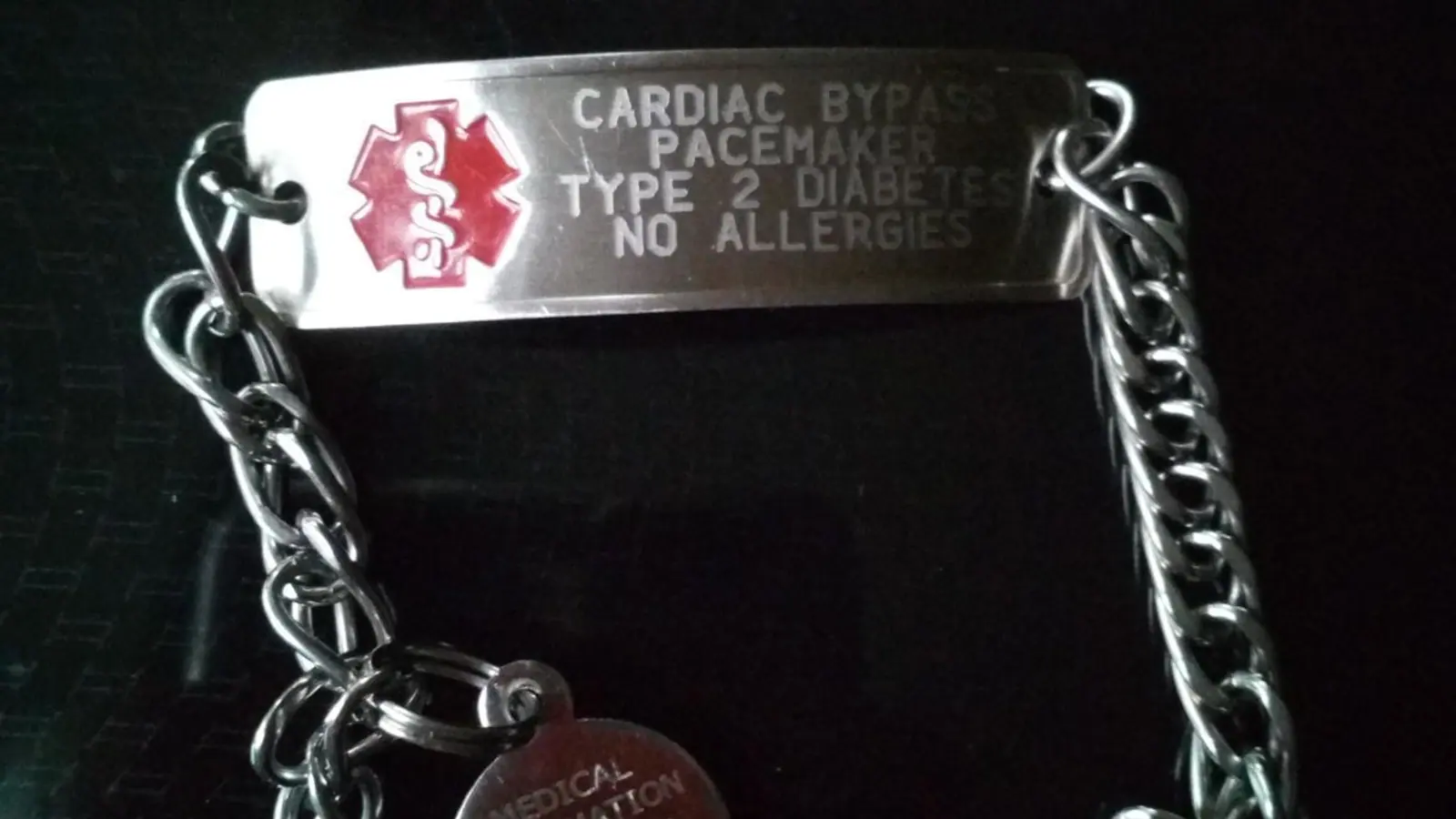

What is a medical alert bracelet? A medical alert bracelet is a piece of jewelry engraved with a health condition, such as a severe food, drug or insect sting allergy, so emergency responders know about it even if you can’t speak. The CDC suggests one, or a similar device, for people with allergies who travel (CDC Travelers’ Health). If you’re also allergic to nickel, the metal matters as much as the words.
Emergency: A bracelet doesn’t treat anything. If someone with a severe allergy has trouble breathing, swelling of the tongue or throat, or faints, use their epinephrine auto-injector if they have one and call 911.
Medical alert bracelet for allergies: what to engrave
Space is short, so put the most important facts first:
- The allergy, in plain words: “Severe peanut allergy”, “Allergic to penicillin”, “Bee sting anaphylaxis”.
- The treatment, if you carry one: “Carries EpiPen” or “Epinephrine in bag”.
- Other conditions that change emergency care, such as asthma.
- An emergency contact number, or “See wallet card” if you need more space.
A review of medical alert jewelry found that the wearer, not a doctor, chooses the engraving, so mistakes and vague wording happen, and it recommended reviewing the information regularly (Anaesthesia). Ask your allergist to check the wording, and replace the tag when your allergies or treatment change. Keep a written allergy action plan with your epinephrine too: the bracelet says what you have, the plan says what to do.
Allergy bracelet for penicillin and other drug allergies
For medicine allergies, name the specific drug or class, for example “Penicillin allergy” rather than “Antibiotic allergy”. Our penicillin allergy guide explains how drug allergies are confirmed with an allergist; if testing changes your label, change the tag too.
Medical ID bracelets vs necklaces
A bracelet, a necklace, a tag on a watch band or an ID card in your wallet can all carry the same information. What matters is that you’ll wear or carry it every day, and that it’s easy to see. The CDC mentions “a bracelet or other device”, so the format is up to you (CDC Travelers’ Health). For children, a bracelet they can’t easily take off, plus a copy of their emergency plan at school, works best.
Medical bracelets for women and men with nickel allergy
Nickel is one of the most common contact allergens: North American patch-test data for 2023 to 2024 found it in 26.4% of patients tested (Dermatitis). Metal worn all day against warm, sweaty skin is a classic trigger, and people can tolerate a metal for years before reacting (MedlinePlus). The same choices apply to bracelets for women and for men:
- Titanium: reviews describe it as highly biocompatible and often chosen for metal-sensitive patients, with allergy reported only rarely (Dermatitis). See our guide to whether titanium is hypoallergenic.
- Surgical-grade stainless steel (316L): in tests on nickel-allergic people, low-sulfur 304 and 316L steels caused no reactions, while free-machining 303 steel and nickel plating did (Contact Dermatitis). More in our stainless steel guide.
- Silicone, nylon or fabric bands keep metal off the skin, with only the tag touching it.
- Leather: chrome-tanned leather can trigger chromium allergy; in one wear test, 4 of 10 chromium-allergic people reacted to a leather bracelet within 3 weeks (Contact Dermatitis).
Check the clasp and the back of the tag, not just the chain: plated or mixed-metal parts are where nickel usually turns up. The EU limits nickel release from any part of a bracelet that touches the skin to 0.5 µg/cm² per week (EUR-Lex), so “meets EU nickel directive” or “nickel-free” on a product description is a useful signal, though no substitute for how your own skin reacts. Our hypoallergenic bracelet guide covers metals in more detail.
Medical alert jewelry for children
For a child with a food allergy, choose a soft silicone band or a breakaway style, sized so it can’t slip off but doesn’t pinch. Engrave the allergy and “Epinephrine” and make sure the school, babysitters and coaches have the child’s emergency plan, since a bracelet alone won’t tell them what to do. Our EpiPen guide shows the steps any caregiver should know.
What we left out, and why
- Brand recommendations and subscription ID services.We haven't tested any, and the site has no store links. What matters is clear wording and a metal your skin tolerates.
- Medical alert devices with fall detection or call buttons.Those are emergency-call systems for older adults, a different product from an allergy ID.
What the evidence doesn’t settle yet
- No study has measured how often an allergy ID changes what responders do during a reaction.
More in Jewelry
Hypoallergenic Earrings: Metals That Avoid Nickel
Hypoallergenic earrings explained: which metals avoid nickel, how to read the label, and what to ask a seller before you buy a pair for sensitive ears.
Titanium vs Surgical Steel: Which Suits Sensitive Skin?
Titanium vs surgical steel for nickel allergy: grades, nickel content, ASTM implant specifications, cost, and when each metal makes sense for your skin.
Is Sterling Silver Hypoallergenic? What Nickel Allergy Means
Is sterling silver hypoallergenic? Usually low in nickel, but plating, cheap alloys and tarnish complicate it. When silver suits sensitive skin.
Is 14k Gold Hypoallergenic? Karats, Alloys and Nickel
Is 14k gold hypoallergenic? Pure gold rarely causes reactions, but its alloy metals can. How karat, white or rose color and plating change nickel risk.
Sources & further reading
- Centers for Disease Control and Prevention (Travelers' Health) — Allergies and travel: carry allergy cards and your emergency plan and consider a medical alert bracelet or other device.
- Anaesthesia — Rahman and colleagues, 2017: review of medical alert jewelry: it can give responders vital information, but patients choose the engraving with no required doctor check, so accuracy varies; recommends regular review of the information. DOI: 10.1111/anae.13958.
- European Union (EUR-Lex) — REACH Annex XVII entry 27 names bracelets, chains, anklets, watch cases and straps; skin-touching parts may not release more than 0.5 µg/cm²/week of nickel, and coatings must hold that for two years.
- MedlinePlus (U.S. National Library of Medicine) — Contact dermatitis: nickel in jewelry and watch straps is a common cause; people may tolerate a substance for years before becoming allergic.
- Dermatitis — Reeder and colleagues, 2026: north American Contact Dermatitis Group results for 2023 to 2024, with nickel (26.4%) and cobalt (8.8%) among the top allergens. DOI: 10.1177/17103568261486176.
- Dermatitis — Wood and Warshaw, 2015: review describing titanium as notable for biocompatibility and often chosen for metal-sensitive patients, with hypersensitivity reported only in rare cases. DOI: 10.1097/der.0000000000000091.
- Contact Dermatitis — Haudrechy and colleagues, 1994: patch, sweat-leaching and electrochemical tests: low-sulfur 304 and 316L steels caused no reactions in nickel-allergic people, while 303 steel and nickel plating did. DOI: 10.1111/j.1600-0536.1994.tb01997.x.
- Contact Dermatitis — Hedberg and colleagues, 2018: 4 of 10 chromium-allergic people reacted to a chrome-tanned leather bracelet worn 12 hours a day for 3 weeks. DOI: 10.1111/cod.12946.