Hypoallergenic Lip Balm: What to Avoid for Lip Allergy
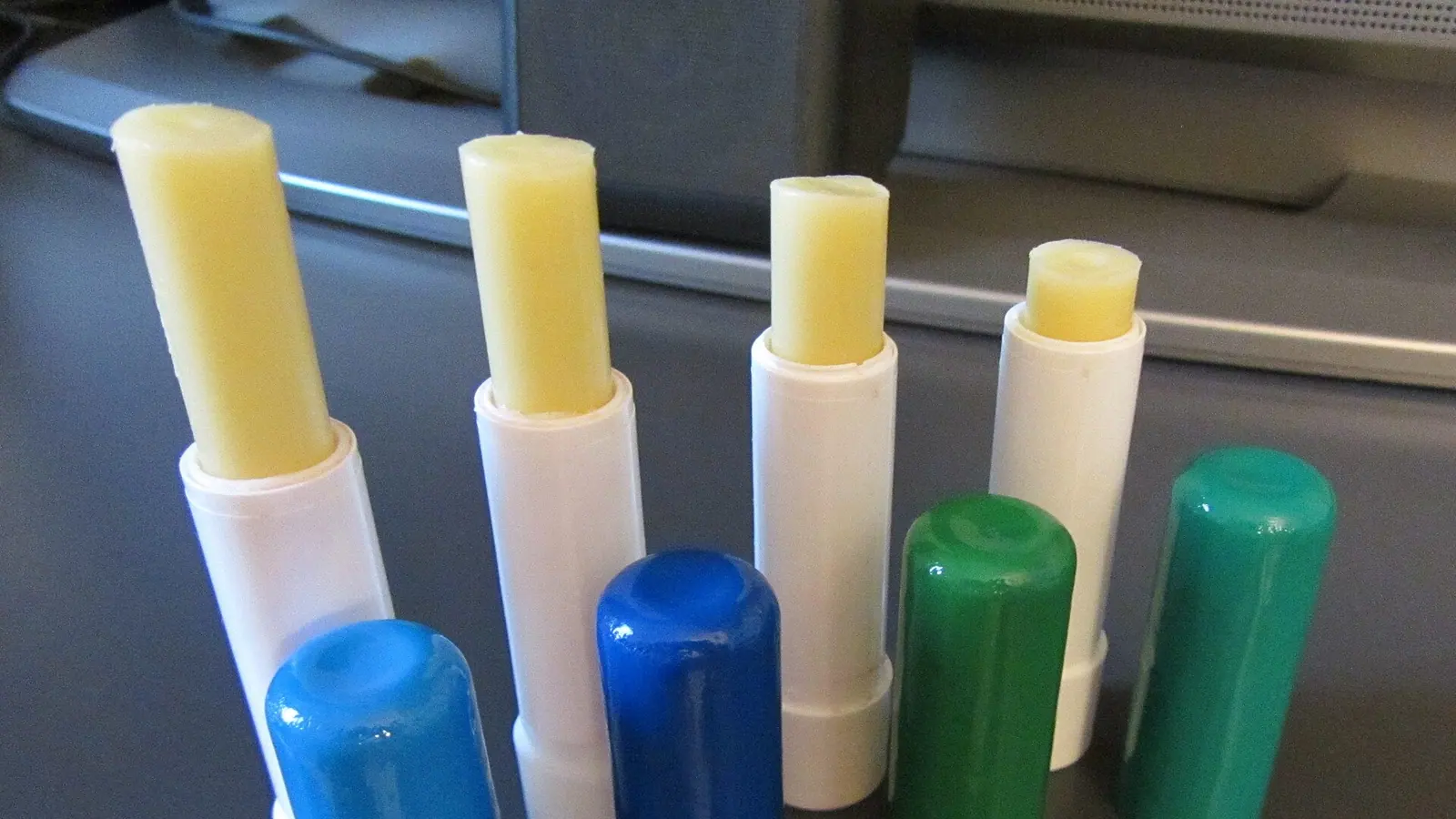

What is the best hypoallergenic lip balm? A good hypoallergenic lip balm is fragrance free and flavor free, has a short ingredient list, and leaves out the ingredients most often behind lip allergy: fragrance, flavorings, beeswax and propolis, lanolin, peppermint and sunscreen filters you react to. “Hypoallergenic” on the tube isn’t a guarantee, so the ingredient list is what counts.
If your lips stay dry, flaky or itchy no matter how much balm you use, the balm itself may be the problem. Doctors call this allergic contact cheilitis.
Lip allergy: signs and causes
A lip allergy usually shows up as dry, cracked, scaly or itchy lips, sometimes with redness spreading onto the skin around the mouth. It often builds over a day or two after contact, as MedlinePlus describes for contact dermatitis in general.
It’s more common than people think. In a study of 91 patients with long-lasting cheilitis who were patch tested, 45% had an allergy to something touching their lips. Fragrances, antioxidants and preservatives led the list, and nickel and gold were among the top ten allergens too. Our lipstick allergy guide covers color cosmetics. If the soreness is mainly in the corners of the mouth, read our angular cheilitis guide.
Allergic reaction to lip balm: the usual ingredients
| Ingredient | Evidence |
|---|---|
| Fragrance and flavor | Fragrance mix and balsam of Peru topped the list in the cheilitis study |
| Antioxidants and preservatives | Gallates and benzoic acid were among the most relevant allergens |
| Beeswax and propolis | 17 of 95 patients tested reacted to beeswax, most of them also to propolis |
| Lanolin | Allergy rose from 0.45% to 1.81% of Danish dermatitis patients in 11 years |
| Peppermint oil | Caused acute lip allergy in published cases |
| Sunscreen filters | Benzophenone-3 in a lip balm caused lip allergy |
Sources: O’Gorman and Torgerson, Nyman and colleagues, Fransen and colleagues, Tran and colleagues and Schram and colleagues.
“Natural” balms aren’t automatically safer: beeswax, propolis and essential oils are all natural, and all appear in the table.
Fragrance free lip balm
Flavor is fragrance by another name: both are aroma chemicals. More than 150 fragrance ingredients have caused contact allergy, according to a review in Dermatitis. The FDA allows them to be listed simply as “Fragrance” or “Flavor,” and notes that unscented products can still contain masking fragrance.
Pick a balm labeled fragrance free with no “flavor,” “aroma” or essential oils in the list. Plain petrolatum or a simple ointment is the shortest possible ingredient list. Our fragrance allergy guide lists the scent ingredients to watch for.
Lanolin allergy
Lanolin, a wax from sheep’s wool, is a classic lip balm ingredient and a known allergen. In a Danish study published in Contact Dermatitis, lanolin allergy among patch-tested dermatitis patients rose from 0.45% in 2004 to 1.81% in 2015, and was weakly linked to atopic dermatitis. On labels look for lanolin, lanolin alcohol, wool wax or wool alcohol.
Lip balm for eczema
If you have eczema, your lips may be dry because of the eczema itself, or because of an allergy to what you put on them. A fragrance-free balm avoids fragrance, the allergen that led the list in a study of patients with lip inflammation (International Journal of Dermatology). If your lips don’t improve with a plain balm, patch testing can show whether an allergy is involved; MedlinePlus explains how it works. Our guide to skin barrier repair covers caring for eczema-prone skin.
Swollen lips allergy: when it’s urgent
Sudden swelling of the lips is different from slow, dry irritation. Swelling of the face, eyes or tongue, especially with trouble breathing, can be anaphylaxis, which MedlinePlus says needs a call to 911 right away. If swelling follows a meal, a food allergy is one possibility; our food allergies guide explains the signs.
More in Personal care
Hypoallergenic Sunscreen: Mineral vs Chemical Filters
Hypoallergenic sunscreen: why zinc oxide and titanium dioxide rarely cause allergy, which chemical filters react most, and how to read Drug Facts.
Hypoallergenic Hair Dye: PPD-Free Options and the Skin Test
Hypoallergenic hair dye and PPD-free claims: what causes hair dye allergy, how to do the skin test on the label, and when to see a doctor before you color.
Hypoallergenic Deodorant: How to Choose for Sensitive Skin
Hypoallergenic deodorant for sensitive underarms: why fragrance causes most reactions, deodorant vs antiperspirant, baking soda, and what to use instead.

Hypoallergenic Shampoo: Ingredients to Avoid and How to Pick
Hypoallergenic shampoo: what the label really means, common allergens such as fragrance and preservatives, signs of a reaction, and how to choose.
Sources & further reading
- International Journal of Dermatology — O'Gorman and Torgerson, 2016: of 91 patch-tested patients with persistent non-actinic cheilitis, 45% had allergic contact cheilitis; fragrance mix, balsam of Peru, gallate antioxidants and benzoic acid were the most relevant, and nickel and gold were in the top 10. DOI: 10.1111/ijd.13044.
- Contact Dermatitis — Nyman and colleagues, 2019: of 95 patients with cheilitis or facial dermatitis tested with beeswax, 17 reacted; 14 of them also reacted to propolis. DOI: 10.1111/cod.13306.
- Contact Dermatitis — Fransen and colleagues, 2018: lanolin allergy among Danish dermatitis patients rose from 0.45% in 2004 to 1.81% in 2015, with a weak link to atopic dermatitis. DOI: 10.1111/cod.12872.
- Dermatitis — Tran and colleagues, 2010: cases of acute allergic contact dermatitis of the lips from peppermint oil in a lip balm. DOI: 10.2310/6620.2010.09040.
- Dermatitis — Schram and colleagues, 2007: case of allergic contact cheilitis from benzophenone-3, a sunscreen filter, in a lip balm, plus fragrance and flavorings. DOI: 10.2310/6620.2007.06071.
- Dermatitis — de Groot, 2020: fragrance allergy review: up to 4.5% of adults are allergic to fragrance materials and more than 150 fragrances have caused contact allergy. DOI: 10.1097/DER.0000000000000463.
- U.S. Food and Drug Administration — Fragrances in cosmetics: products labeled unscented may contain masking fragrance, and fragrance and flavor ingredients can be listed simply as "Fragrance" or "Flavor".
- MedlinePlus (U.S. National Library of Medicine) — Anaphylaxis: symptoms include swelling of the face, eyes or tongue and trouble breathing; it is an emergency, call 911 immediately.
- MedlinePlus (U.S. National Library of Medicine) — Contact dermatitis: an allergy usually shows 24 to 48 hours after contact; patch testing finds the cause; treatment includes avoiding the substance.