Hypoallergenic Mattress Topper: Mites, Foam and Covers
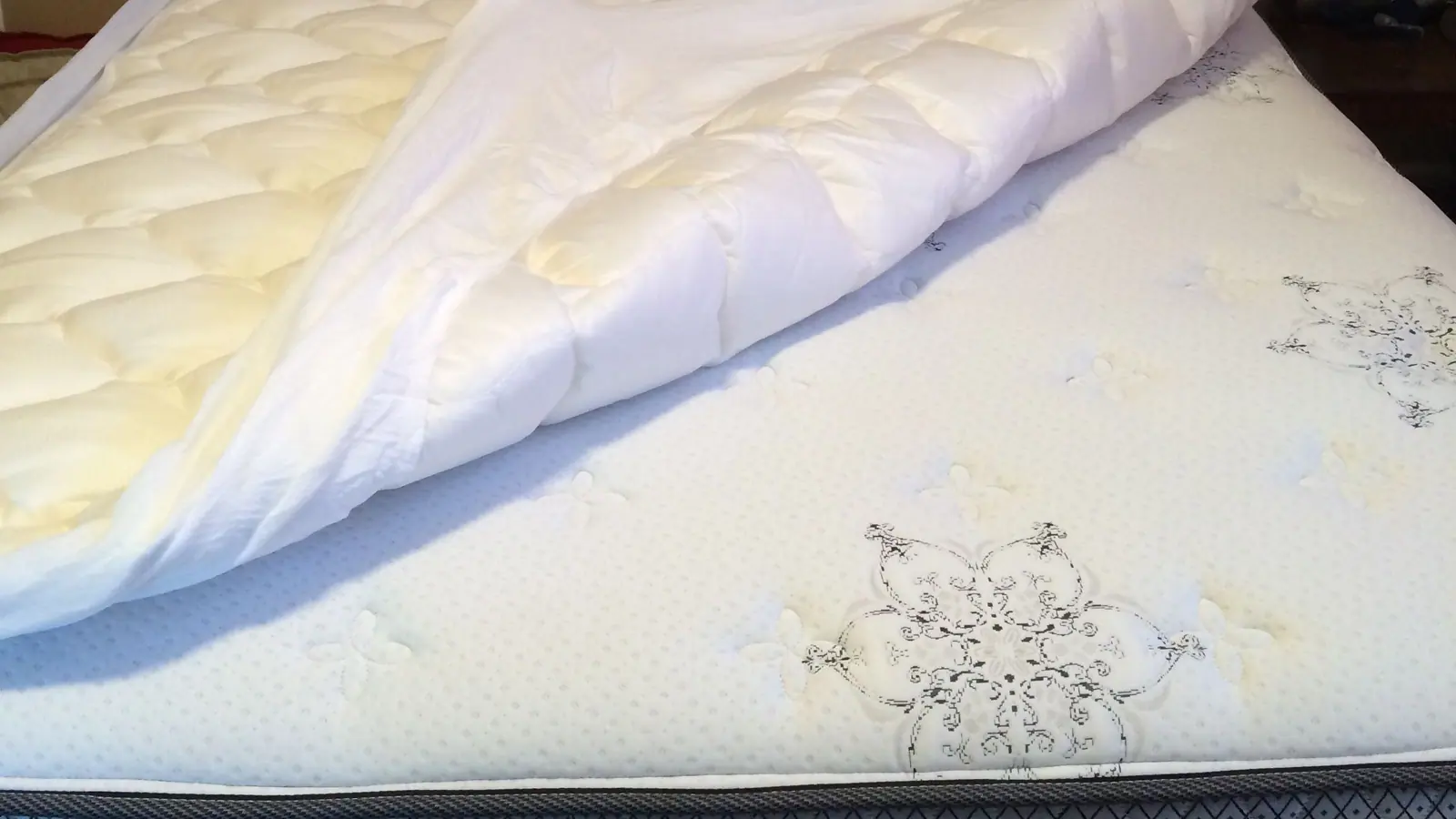
Is a hypoallergenic mattress topper worth it? A hypoallergenic mattress topper is a removable layer of foam, latex or fiber fill sold as less likely to trigger allergies. No topper stops dust mites on its own: it sits right under your sheet, so it collects skin flakes and mite allergen like any mattress surface. What makes a topper allergy-friendly is a removable cover you can wash hot and a mite-proof encasing around it.
Mattress topper for allergies: toppers collect allergen too
Dust mites live where people shed skin, and the top few centimeters of the bed get the most. Foam doesn’t keep them out. Testing foam from 28 used cot mattresses, Jenkins found mite allergen builds up inside polyurethane foam with use, and older foam yields more dust.
Vacuuming helps less than you’d hope. Wickman and colleagues cut mattresses into sections after vacuuming: intense vacuuming left about a fifth of the allergen in the top 2 cm, but the live mites kept producing more. A topper you can’t wash or cover will slowly turn into a reservoir.
Encase it, or choose a washable cover. A mite-proof encasing is the measure with the clearest effect on allergen levels:
- In 31 heavily infested mattresses, Vichyanond and colleagues found a mite-impermeable membrane cut allergen on the sheet surface by more than 90% for six months.
- In 19 homes in Brazil, Tobias and colleagues saw mite allergen in bedding dust drop from 24 µg/g to about 1 µg/g after covers went on the mattress and pillows.
Lower allergen doesn’t always mean fewer symptoms. In a 12-month trial in adults with asthma, Luczynska and colleagues found impermeable covers didn’t improve breathing or symptoms compared with placebo covers. Treat the encasing as one part of a plan that also includes weekly hot washing of sheets and medical treatment.
Setup that works: put the topper on the mattress, then a deep dust mite mattress cover that zips around both (check the depth fits), then your sheet. Or choose a topper with a zip-off cover that can go in the washing machine at 60 °C (140 °F).
Memory foam off gassing: foam smell and VOCs
New foam toppers often smell. That smell comes from volatile organic compounds (VOCs). Boor and colleagues found all 20 crib mattresses they tested gave off VOCs, more when new and more at body temperature, with polyurethane foam releasing a wider range than polyester. Oz and colleagues confirmed that body heat is the main driver of emissions from polyurethane mattresses. The EPA notes that furnishings are among indoor VOC sources and recommends ventilation.
VOCs aren’t allergens in the immune sense, and these studies estimated exposure rather than symptoms. Still, the simplest step follows the EPA’s advice: unwrap a new foam topper in a ventilated room and let it air out before sleeping on it.
Choosing a hypoallergenic mattress topper
| Fill | Allergy notes |
|---|---|
| Memory foam (polyurethane) | Dense, can’t be washed; needs an encasing; new foam emits VOCs |
| Natural latex | Resilient; avoid if you have latex allergy, and ask what the core is made of |
| Polyester fiberfill | Often machine washable; mites colonize it like any fill |
| Wool or feather | Natural; check washability and whether the cover is tightly woven |
- Removable, washable cover (60 °C if possible).
- Fits inside an encasing with your mattress.
- Air out new foam before use.
- Replace an old topper rather than trying to clean it.
For the mattress underneath, see our guide to the hypoallergenic mattress, and for babies, where safe sleep rules come first, see the hypoallergenic crib mattress guide.
Sources & further reading
- Allergy and Asthma Proceedings — Jenkins, 2008: tests of polyurethane foam from 28 used cot mattresses showing that older foam yields more dust and that mite allergen Der p 1 builds up inside it over time. DOI: 10.2500/aap2008.29.3077.
- Allergy — Wickman and colleagues, 1997: intense vacuuming left 22% of the mite allergen reservoir in the top 2 cm of mattresses but did not kill the live mites producing new allergen. DOI: 10.1111/j.1398-9995.1997.tb00187.x.
- Allergy — Vichyanond and colleagues, 1999: a mite-impermeable membrane cut allergen on the sheet surface of 31 heavily infested mattresses by more than 90% for 6 months. DOI: 10.1034/j.1398-9995.1999.00060.x.
- International Archives of Allergy and Immunology — Tobias and colleagues, 2004: mite-impermeable mattress and pillow covers lowered mite allergen in bedding dust from 24 µg/g to about 1 µg/g over 6 months in 19 homes. DOI: 10.1159/000077356.
- Clinical and Experimental Allergy — Luczynska and colleagues, 2003: 12-month trial in adults with asthma in which impermeable bed covers did not improve peak flow or symptoms compared with placebo covers. DOI: 10.1111/j.1365-2222.2003.01729.x.
- Environmental Science & Technology — Boor and colleagues, 2014: all 20 crib mattresses tested emitted VOCs, more at body temperature and when new, with polyurethane foam releasing a wider range than polyester. DOI: 10.1021/es405625q.
- Environmental Science & Technology — Oz and colleagues, 2019: chamber tests of 8 polyurethane mattresses in which VOC emissions rose under sleeping conditions, driven mainly by body heat. DOI: 10.1021/acs.est.9b01557.
- U.S. Environmental Protection Agency — VOCs are often found at higher levels indoors than outdoors, furnishings are among the sources, and ventilation helps.
More in Bedding
Dust Mite Pillow Cover: Weave, Zipper and What Trials Show
A dust mite pillow cover blocks mite allergen when the weave is tight and the zipper seals. Lab tests, trials in asthma and rhinitis, and how to choose.
Hypoallergenic Down Comforter: Who Can Use Feathers
Is a hypoallergenic down comforter safe for allergies? What trials show on feather bedding and asthma, the rare feather duvet lung, and how to choose.
Silk Pillowcase: What the Eczema Trials Actually Found
Is a silk pillowcase good for sensitive skin? What eczema trials of silk fabric found, why most tested special medical silk, and what to look for instead.
Bamboo Sheets: Viscose, Lyocell and the Allergy Claims
Are bamboo sheets hypoallergenic? Most are bamboo viscose or lyocell. What tests show on antibacterial claims, labeling rules and what really matters.
Organic Cotton Sheets: What the Label Means for Skin
Are organic cotton sheets better for sensitive skin? What the USDA organic label covers, the dyes and wrinkle-free resins behind textile rashes, and tips.
Down Alternative Comforter: Is Synthetic Better for Allergy?
Is a down alternative comforter better for allergies? Agencies advise synthetic bedding, yet studies found more allergen in synthetics. What matters most.