Dyshidrotic Eczema: Causes, Triggers and Treatment
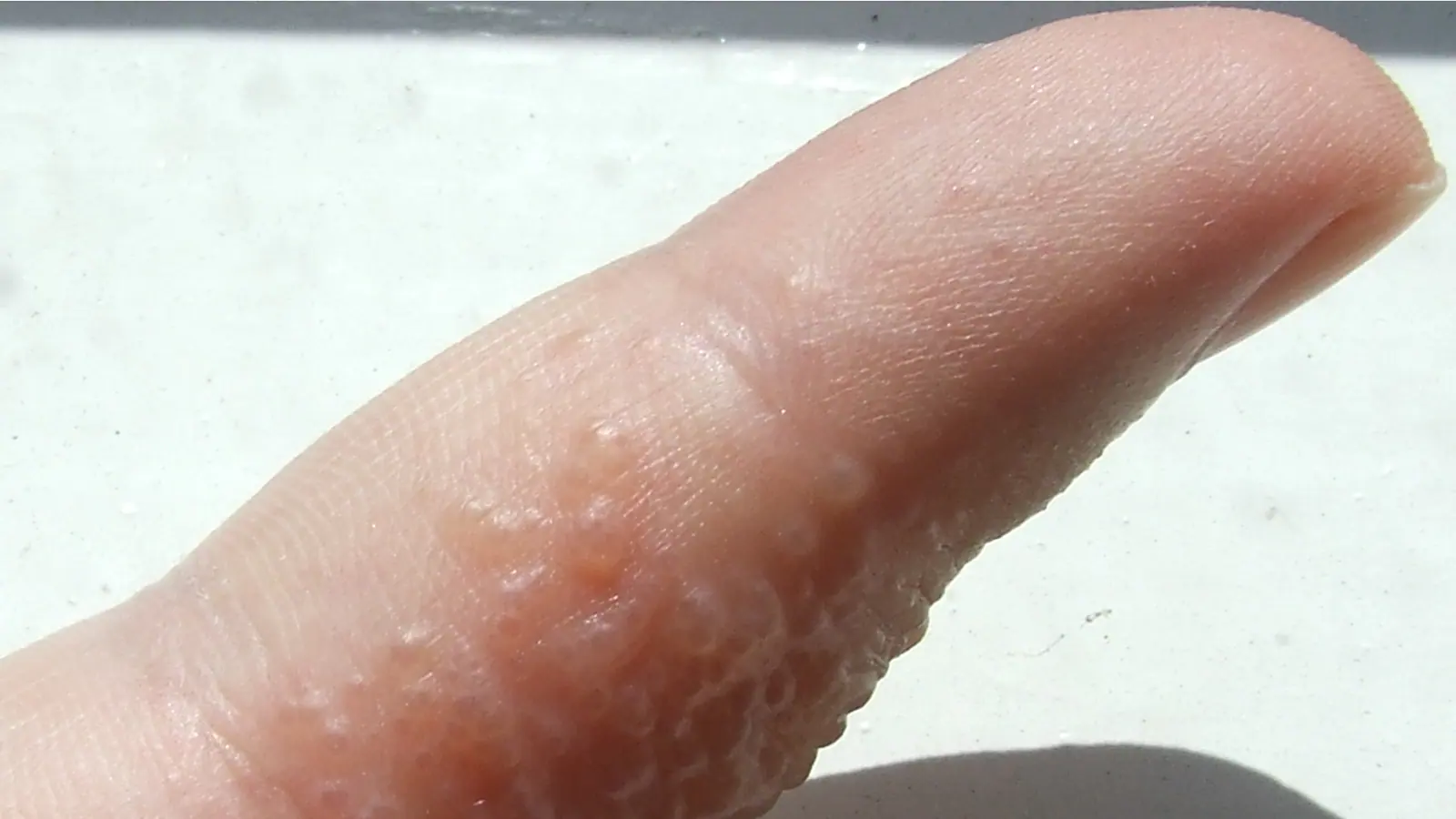

What is dyshidrotic eczema? Dyshidrotic eczema is a type of eczema that causes sudden crops of tiny, deep, intensely itchy blisters on the sides of the fingers, the palms and the soles of the feet. You’ll also see it called dyshidrosis or pompholyx: all three names mean the same condition. It isn’t contagious, it tends to come back in flares, and flares can be calmed with gloves, moisturizer and a steroid cream from a doctor.
The blisters sit under the thick skin of the hands and feet, so they look like grains of tapioca rather than bubbles on the surface. A review in Current Problems in Dermatology notes that the old name “dyshidrosis” (faulty sweating) is misleading: under the microscope it’s an eczema reaction around the sweat ducts, and the sweat ducts themselves are normal.
Dyshidrotic eczema hands
Hands are where it shows up most. A typical flare goes like this:
- Itching or burning first, often a day before anything is visible.
- Tiny clear blisters along the sides of the fingers and across the palms, sometimes merging into larger ones.
- Drying and peeling as the blisters fade, with cracks that can hurt.
Dyshidrotic eczema fingers
The sides of the fingers are the classic spot, and some people call the blisters “stress bumps on fingers.” In a study of 50 patients, 60% had it only on the hands, 36% on hands and feet, and 4% only on the feet. Rings trap sweat and soap against the skin, so take them off while the fingers are flaring.
Dyshidrotic eczema on feet
On the feet, the same blisters appear on the soles, the sides of the feet and between or under the toes. Walking and tight shoes make them sore. Change damp socks, choose breathable shoes, and let feet dry fully after washing. Blistering between the toes can also be athlete’s foot, which is a fungal infection, so ask a doctor to check if you’re not sure which it is.
Dyshidrotic eczema causes
Nobody knows the exact cause, but the same factors keep turning up in studies:
| Factor | What studies found |
|---|---|
| Sweaty hands | Patients sweated 2.5 times more than people without it (Yokozeki); sweating aggravates nearly 40% of cases (Swartling) |
| Season | The time of year was the aggravating factor patients named most often in an Italian study of 104 patients (Lodi); a review links flares to the spring allergy season (Nishizawa) |
| Atopy (eczema, hay fever or asthma in you or your family) | 50% of patients vs 11.5% of controls (Lodi) |
| Contact allergy | 40% reacted to at least one allergen on patch testing (Jain) |
Dyshidrotic eczema triggers
The triggers people notice most are hot weather, sweating, emotional stress, frequent hand washing and contact with something they’re allergic to. Wet work, detergents and harsh soaps strip the skin and make flares last longer. A plain fragrance-free hand soap and lukewarm water are kinder to flaring hands.
Dyshidrotic eczema nickel
Nickel is the allergen linked most often. In the Italian study, 20% of patients had a positive nickel patch test against 6% of controls (Lodi). In a Japanese study, 28% reacted to nickel, 20% to chromate and 16% to cobalt, and swallowing a small dose of the metal brought the blisters back in 4 of 6 people tested (Yokozeki). That’s why our nickel allergy guide is worth reading if your flares don’t have an obvious cause. A low-nickel diet is only worth trying after a positive patch test and with a doctor’s advice.
Is dyshidrotic eczema contagious?
No. Dyshidrotic eczema is an inflammatory skin reaction within the eczema family (Wollina), not an infection, so you can’t catch it or pass it on by touch. The exception is a secondary infection: scratched, broken blisters can pick up bacteria. See a doctor promptly if blisters fill with yellow pus, the skin turns hot, red and swollen, red streaks spread up the arm or leg, or you get a fever.
Dyshidrotic eczema treatment
The first steps, according to a hand eczema review in the NEJM, are the same for most hand eczema: protect the skin from irritants and allergens, moisturize often, and treat flares with a strong steroid cream.
Dyshidrotic eczema cream
A potent prescription steroid cream or ointment is the standard treatment for a flare, used for a short course as your doctor directs. The thick skin of the palms and soles needs a stronger steroid than the face would. Non-steroid creams (tacrolimus or pimecrolimus, used off label for this) are an option some dermatologists use when steroids aren’t suitable (Wollina).
For moderate to severe chronic hand eczema in adults that hasn’t responded to steroid creams, there’s now a prescription non-steroid cream, delgocitinib, listed in the official prescribing information. In two large trials, 20% to 29% of people using it had clear or almost clear hands after 16 weeks, against 7% to 10% with the plain cream base (Lancet).
Dyshidrotic eczema moisturizer
Moisturizer won’t stop a blistering flare, but it shortens the dry, cracked phase and helps prevent the next one. Pick a thick, fragrance-free cream or ointment and use it after every hand wash. Our hand cream for eczema guide explains which ingredients to avoid and how to build a routine. For other types of hand eczema, see our hand eczema guide. Cotton gloves over moisturizer at night help it soak in.
Dyshidrotic eczema medication
When creams aren’t enough, a dermatologist may suggest:
- Botulinum toxin injections (off label) for people whose flares follow heavy hand sweating: 7 of 10 patients with stubborn blistering hand eczema had a good or very good result in a small study.
- Dupilumab, an injected medicine approved for atopic eczema but not specifically for hand eczema: in a review of 374 patients with chronic hand eczema, 80% improved, and response was high in the dyshidrotic and blistering types.
- Light therapy, steroid tablets or other immune-calming medicines for severe flares, used under specialist care (Wollina and Naser).
How to get rid of dyshidrotic eczema
There’s no permanent cure, since it tends to relapse (Wollina), but most people can make flares rarer and shorter:
- Don’t pop the blisters. Let them dry on their own; cool compresses ease the itch.
- Wear gloves for wet work and cleaning, ideally cotton gloves under vinyl or nitrile ones. If you react to rubber, our latex allergy guide covers alternatives.
- Keep hands and feet dry. Dry carefully between fingers and toes, and change damp socks.
- Get a patch test if flares keep returning. Finding and avoiding an allergen such as nickel, cobalt or a fragrance can make a real difference (Jain).
- Treat early. Starting the cream your doctor prescribed at the first itch often keeps a flare small.
If what you have is itchy welts that come and go within hours rather than blisters, that’s more likely hives, and a sweat-triggered rash of tiny red bumps on the body is usually heat rash.
More in Guides & situations
Hives: What Causes Them and How to Get Rid of Hives
Hives are itchy welts that come and go within hours. See what hives look like, what causes them, which antihistamine helps and when chronic hives need a doctor.
Heat Rash: Symptoms, Treatment and How to Get Rid of It
Heat rash (prickly heat) is blocked sweat ducts, not an allergy. See heat rash symptoms, heat rash vs hives, treatment for adults and how to get rid of it fast.
Poison Ivy Rash: Stages, Treatment and How Long It Lasts
A poison ivy rash is an allergy to urushiol oil. See what poison ivy looks like, the rash stages, if it's contagious, how long it lasts and treatment.
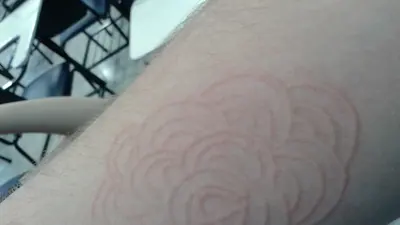
Dermatographia: Skin Writing Causes and Treatment
Dermatographia makes itchy welts rise wherever skin is scratched or rubbed. Learn what causes dermatographia, how skin writing is tested and how it's treated.
Sources & further reading
- Current Problems in Dermatology — Nishizawa, 2016: review: dyshidrotic eczema (dyshidrotic dermatitis, pompholyx) causes itchy, small, tense blisters on the palms, soles and sides of the fingers; it is linked to sweating and the spring allergy season; histology shows eczema around the sweat ducts without sweat duct damage; metal allergy is an important possible cause. DOI: 10.1159/000446785.
- Contact Dermatitis — Lodi and colleagues, 1992: 104 patients with pompholyx and 208 controls in Italy: personal or family atopy in 50% vs 11.5%; nickel patch test positive in 20% vs 6%; the season (43 patients) and heavy sweating (38) were the most common aggravating factors. DOI: 10.1111/j.1600-0536.1992.tb00862.x.
- The Journal of Dermatology — Yokozeki and colleagues, 1992: 25 patients with pompholyx sweated 2.5 times more than matched controls; 28% were patch test positive to nickel, 20% to chromate and 16% to cobalt; swallowing the metal reproduced the blisters in 4 of 6 patients tested. DOI: 10.1111/j.1346-8138.1992.tb03813.x.
- The Journal of Dermatology — Jain and colleagues, 2004: 50 patients with pompholyx patch tested: 40% reacted to at least one allergen, most often nickel (14%), then chromate, hair dye (PPD), fragrance mix and cobalt; patch testing is advised for recurrent pompholyx. DOI: 10.1111/j.1346-8138.2004.tb00655.x.
- Journal of the American Academy of Dermatology — Swartling and colleagues, 2002: hand sweating aggravates nearly 40% of dyshidrotic hand eczema; botulinum toxin injections gave a good or very good effect in 7 of 10 patients with treatment-resistant vesicular hand eczema. DOI: 10.1067/mjd.2002.124605.
- The New England Journal of Medicine — Coenraads, 2012: hand eczema review: initial management is avoiding irritants and allergens (for example with impermeable gloves), emollients and potent topical steroids. DOI: 10.1056/NEJMcp1104084.
- Expert Opinion on Investigational Drugs — Wollina, 2008: pompholyx is a chronic, relapsing, inflammatory blistering disease of the hands and feet within the eczema spectrum; established treatments have limited efficacy and relapses are common; topical calcineurin inhibitors and botulinum toxin look effective. DOI: 10.1517/13543784.17.6.897.
- Expert Opinion on Pharmacotherapy — Wollina and Naser, 2004: pompholyx of the palms and soles is hard to treat because of the thick outer skin and many sweat glands; topical steroids are the cornerstone, calcineurin inhibitors also work, topical light therapy (PUVA) is an option, and steroid tablets, sometimes with immunosuppressants, are used for severe blistering. DOI: 10.1517/14656566.5.7.1517.
- The Lancet — Bissonnette and colleagues, 2024: DELTA 1 and DELTA 2 phase 3 trials (960 adults with moderate to severe chronic hand eczema): clear or almost clear skin at 16 weeks in 20% and 29% with delgocitinib cream vs 10% and 7% with the plain cream base; side effects similar to the base. DOI: 10.1016/S0140-6736(24)01027-4.
- DailyMed (U.S. National Library of Medicine) — Prescribing information for delgocitinib cream: indicated for moderate to severe chronic hand eczema in adults who responded poorly to topical steroids or can't use them.
- Dermatitis — Riva and colleagues, 2026: systematic review of 22 publications (374 patients): 80% of people with chronic hand eczema improved partly or fully on dupilumab within 4 to 16 weeks; response was high in dyshidrotic and vesicular types; conjunctivitis was the most common side effect (9.9%). DOI: 10.1089/derm.2024.0186.